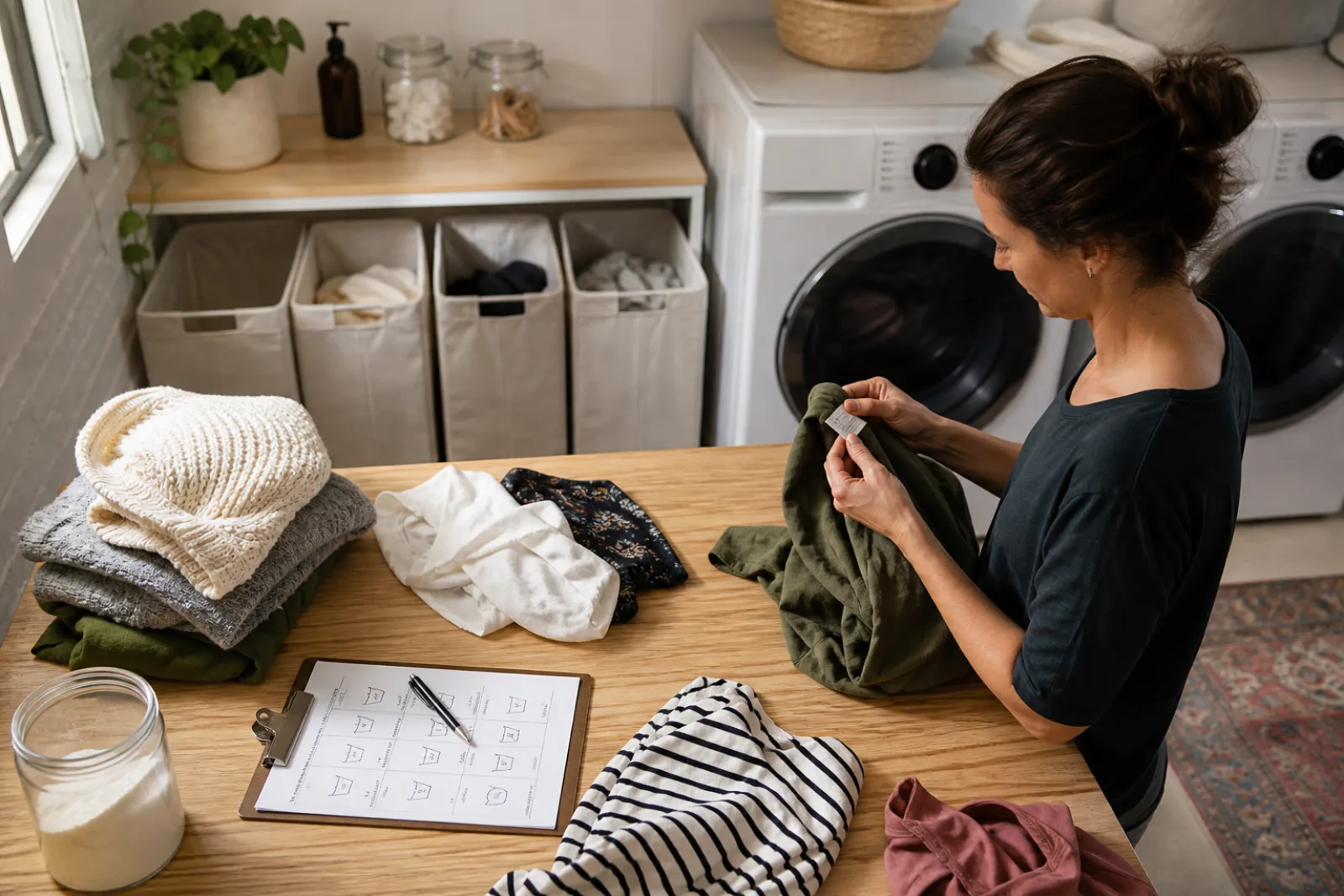
How to Build a Laundry System That Actually Protects Your Clothes
Color sorting is the wrong axis. Real laundry systems sort by heat and fiber tolerance, follow the care label as written, and stop stains before heat makes them permanent.
Setting the next column
CC
The archive
Color sorting is the wrong axis. Real laundry systems sort by heat and fiber tolerance, follow the care label as written, and stop stains before heat makes them permanent.
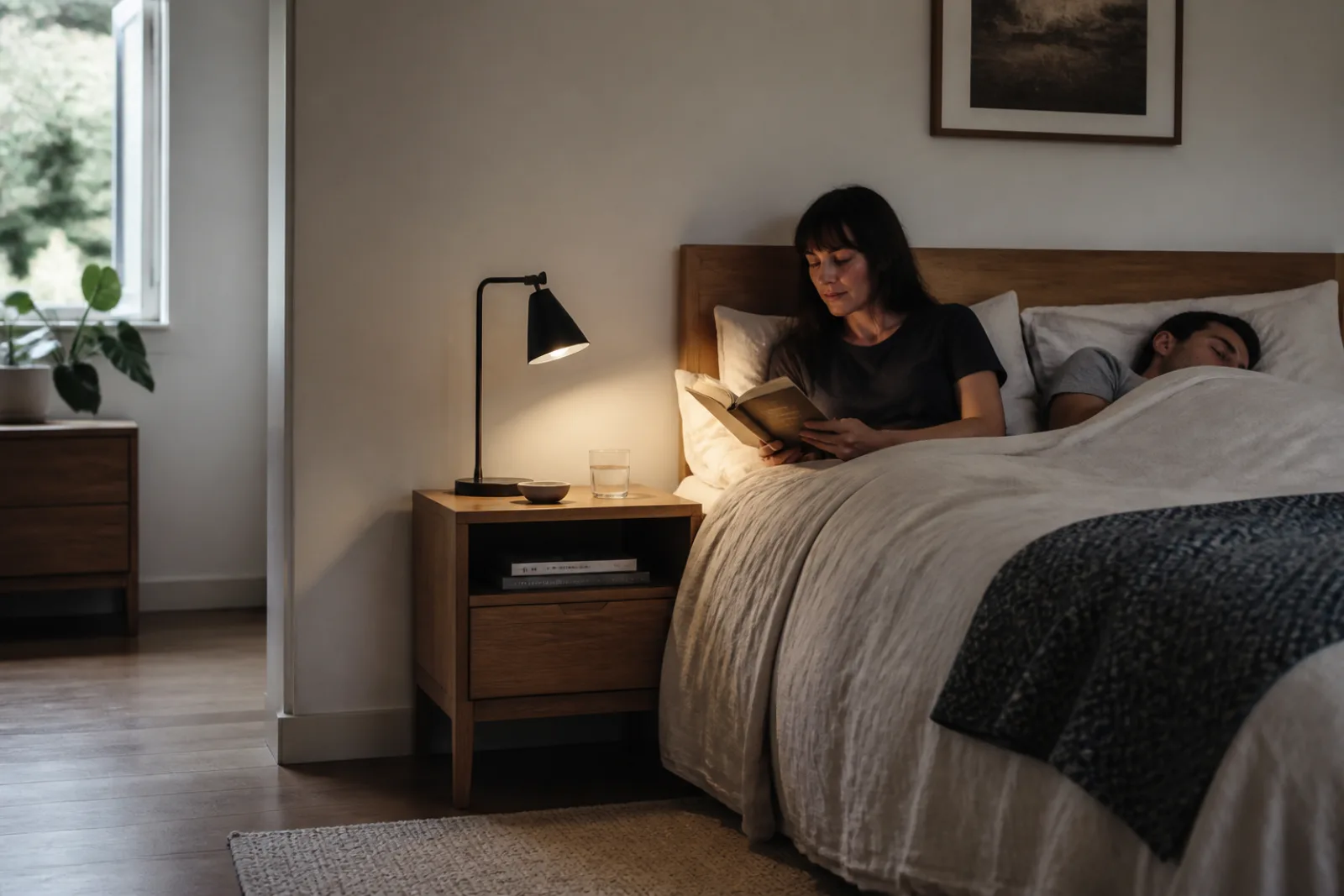
Bedside lighting has three specific jobs a living-room lamp does not: contain its beam, stay findable in the dark, and use a color temperature that does not fight the body's wind-down signal.

Buy open-stock glasses with a wide, heavy enough base, a rim you can drink from daily, and a shape that fits your dishwasher. Pretty and fragile is fine for the shelf you do not use on a Tuesday.

Measure the window, not the vibe. Low-light plants belong more than eight feet from glass or on a north wall. Check the ASPCA list if you have pets. The EPA is clear: a reasonable number of houseplants do not purify indoor air.
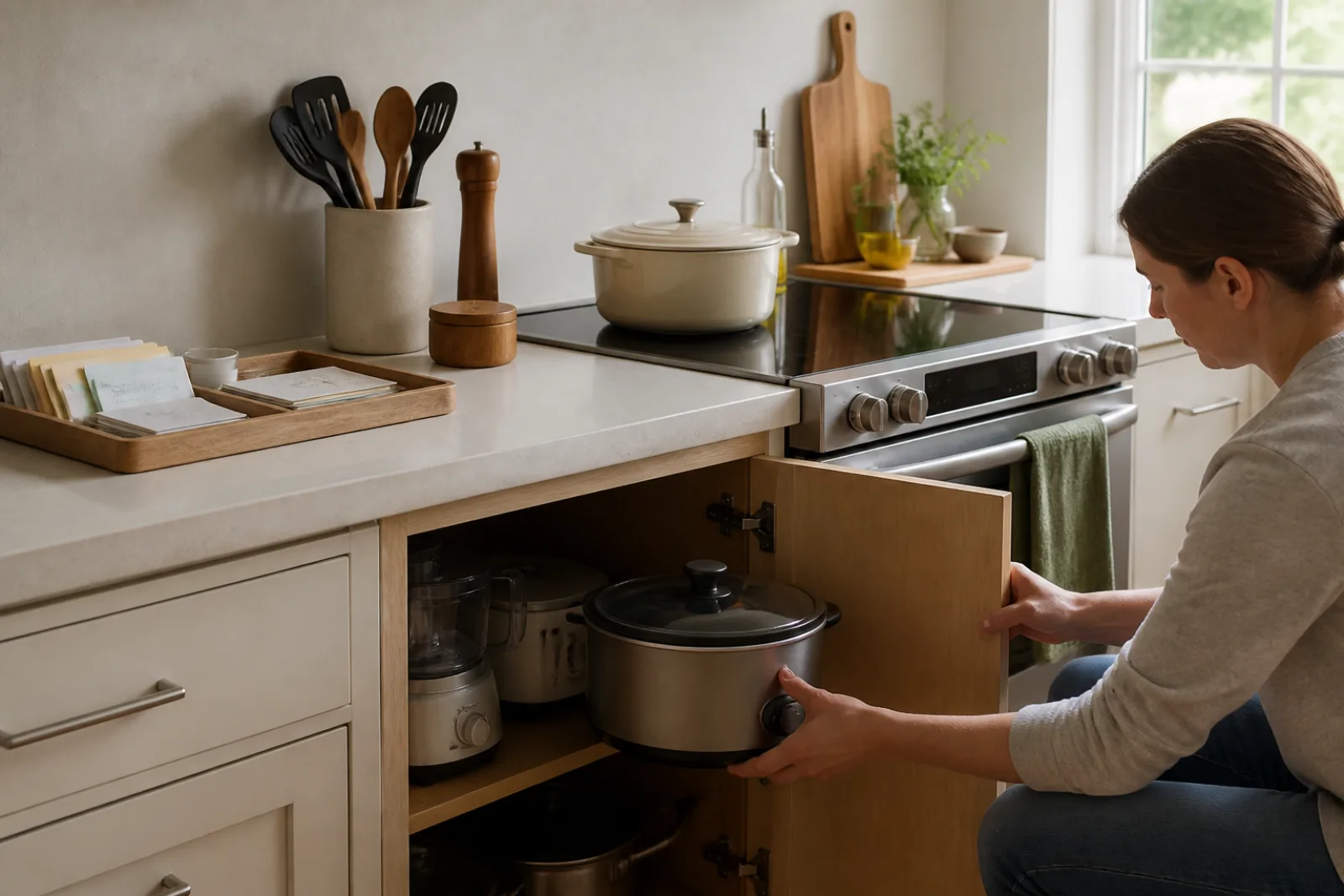
Kitchen counters fill up because they're the easiest flat surface in the house. Sort by frequency of use and protect one clear prep zone, and the clutter stops coming back.
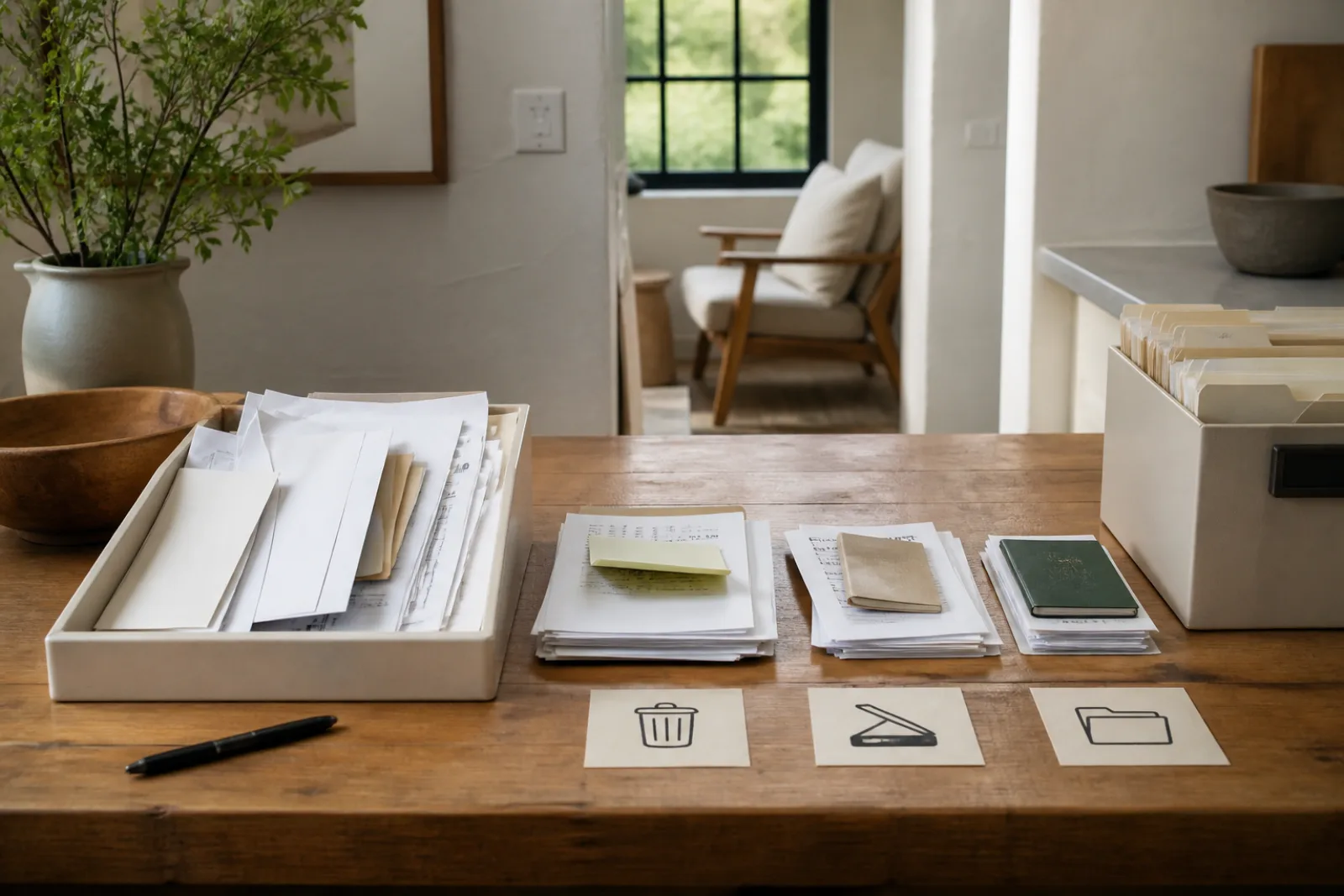
Household paper piles up because there's no single entry point and no decision rule, not because there's too much of it. One tray, one rule, one weekly review fixes most of it.
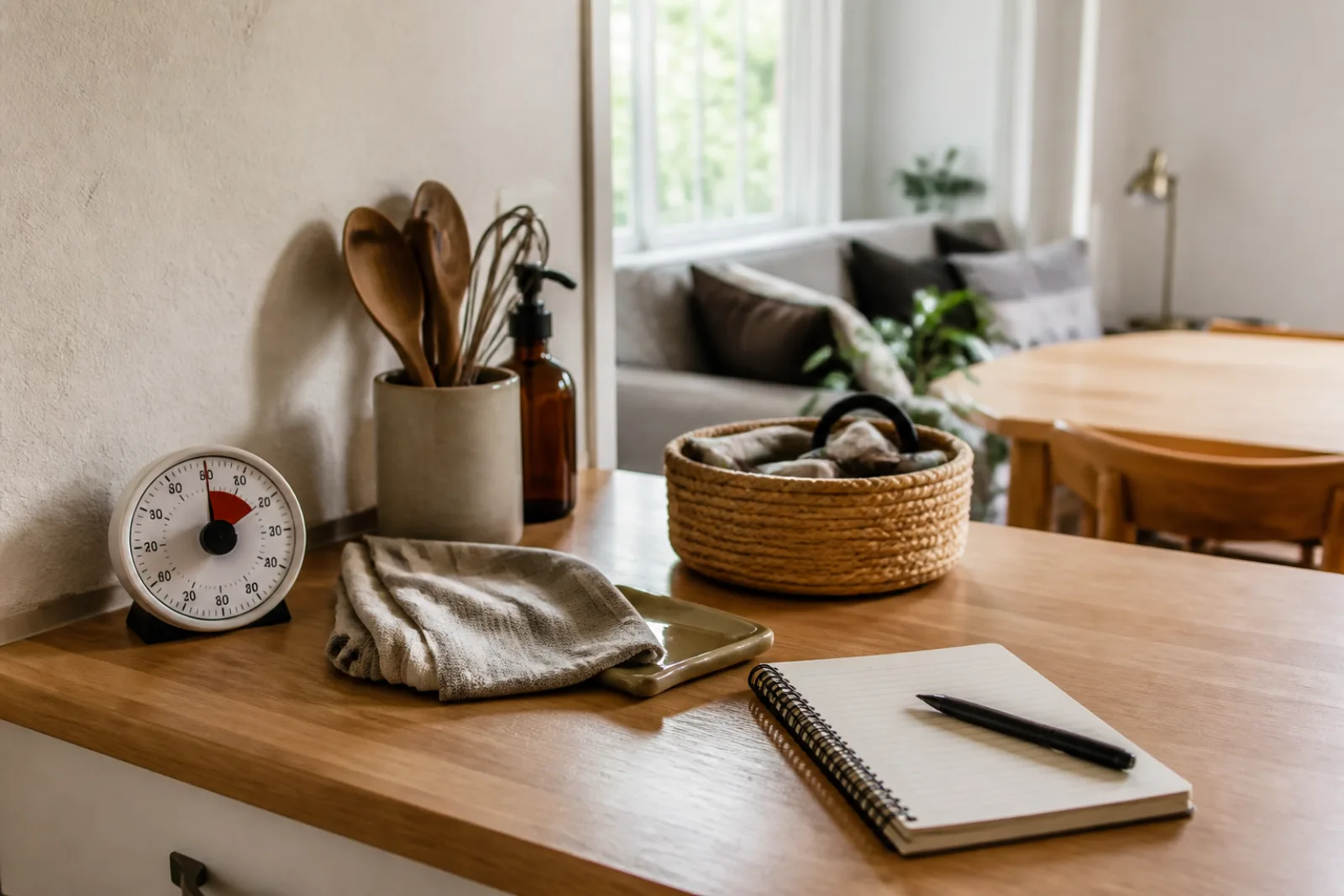
A ten-minute evening reset needs the right three tasks and a fixed stopping cue. When it keeps running long, that is diagnostic information, not a discipline problem.
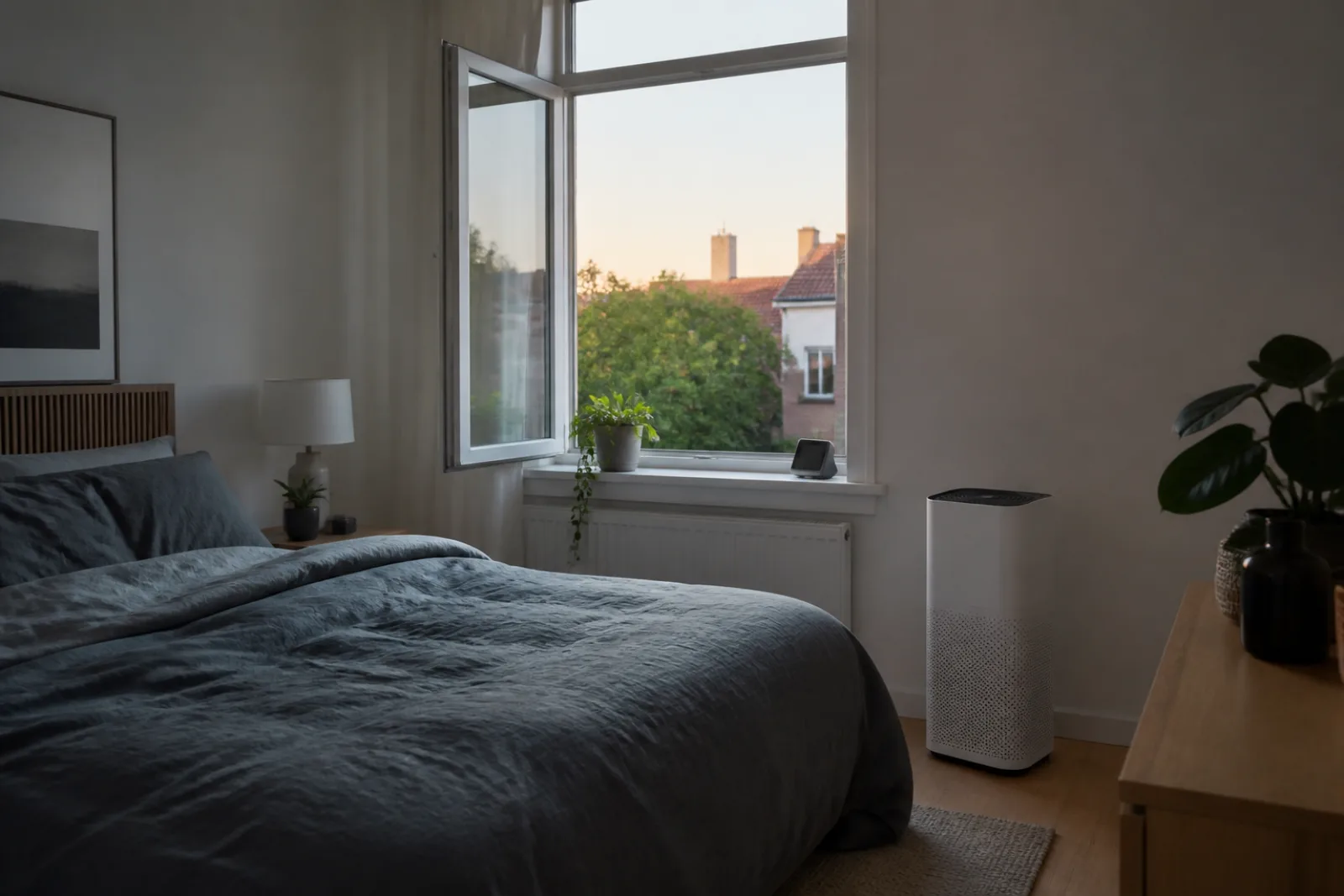
EPA's three-part method for indoor air, source control, ventilation, filtration, applied specifically to a bedroom: a closed room where the same air gets breathed for seven or eight hours straight.
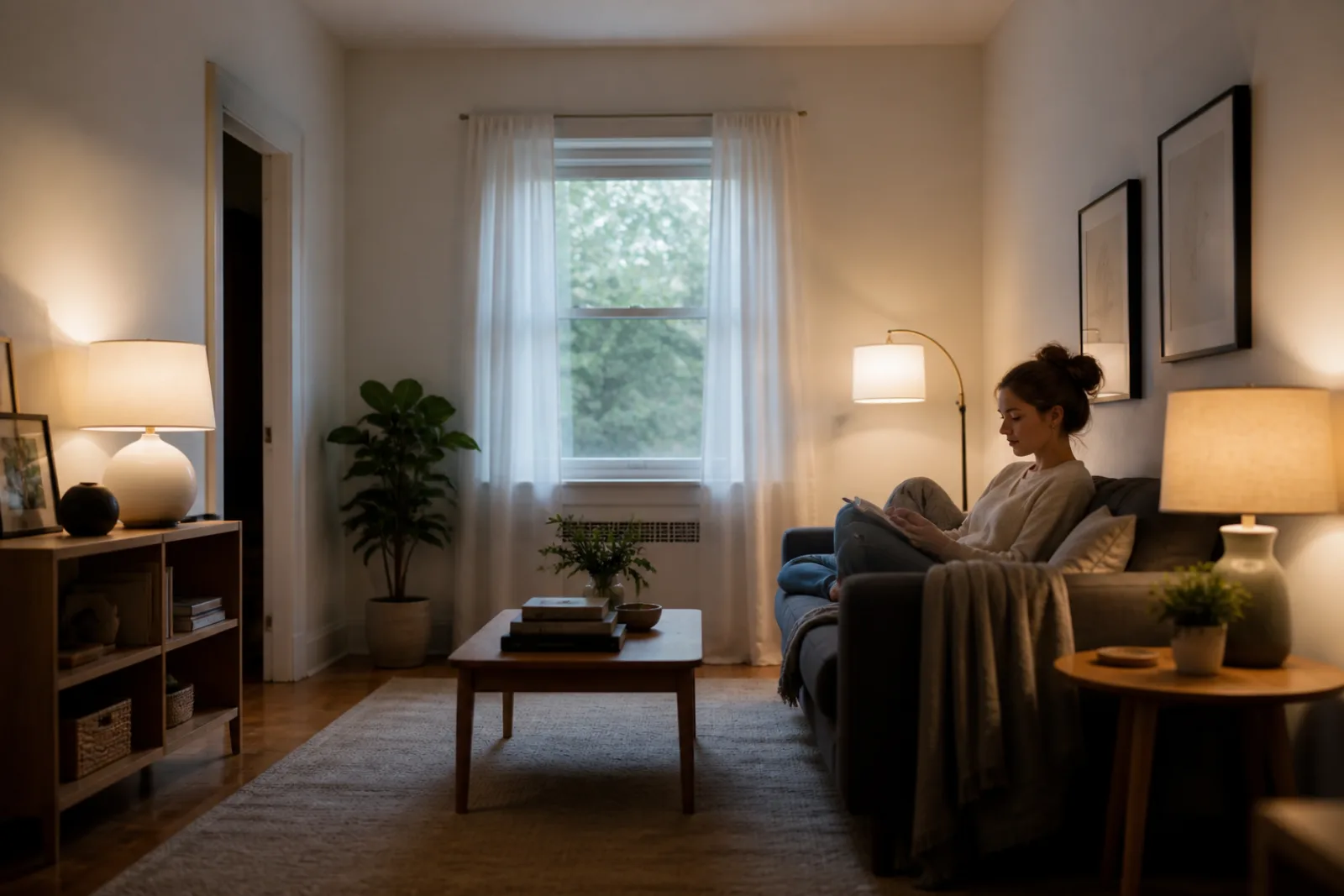
You cannot move the ceiling box. You can add a floor lamp, a task lamp, and the right LED in the existing fixture. Read lumens and Kelvin on the Lighting Facts label, not watts, and point the light at the work.
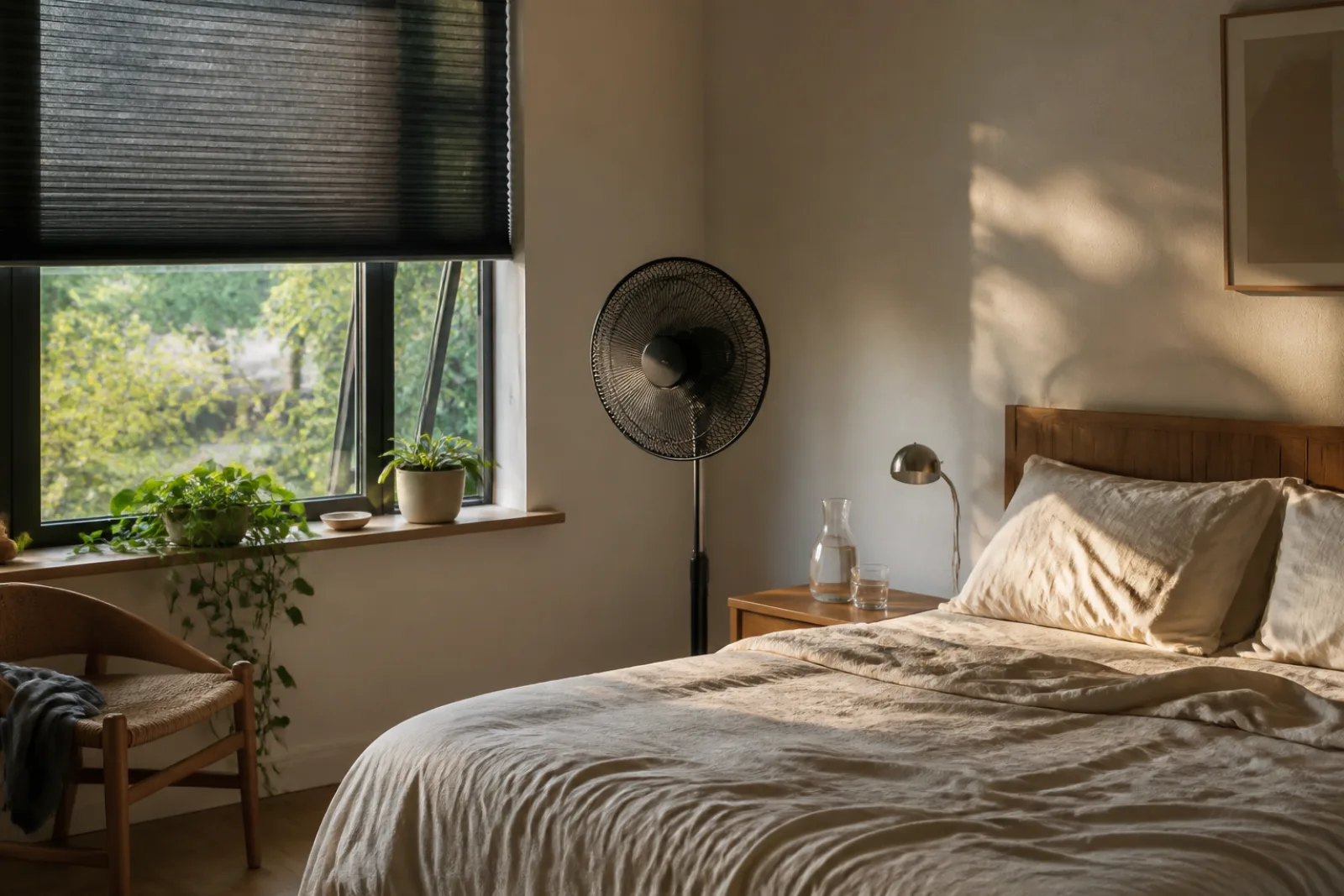
Block daytime sun, run a fan across the body not the wall, crack a window if outdoor air is cooler and safe, and switch to lighter, drier bedding. A cooling mattress pad is optional. Dark, closed curtains at 4 p.m. are not.
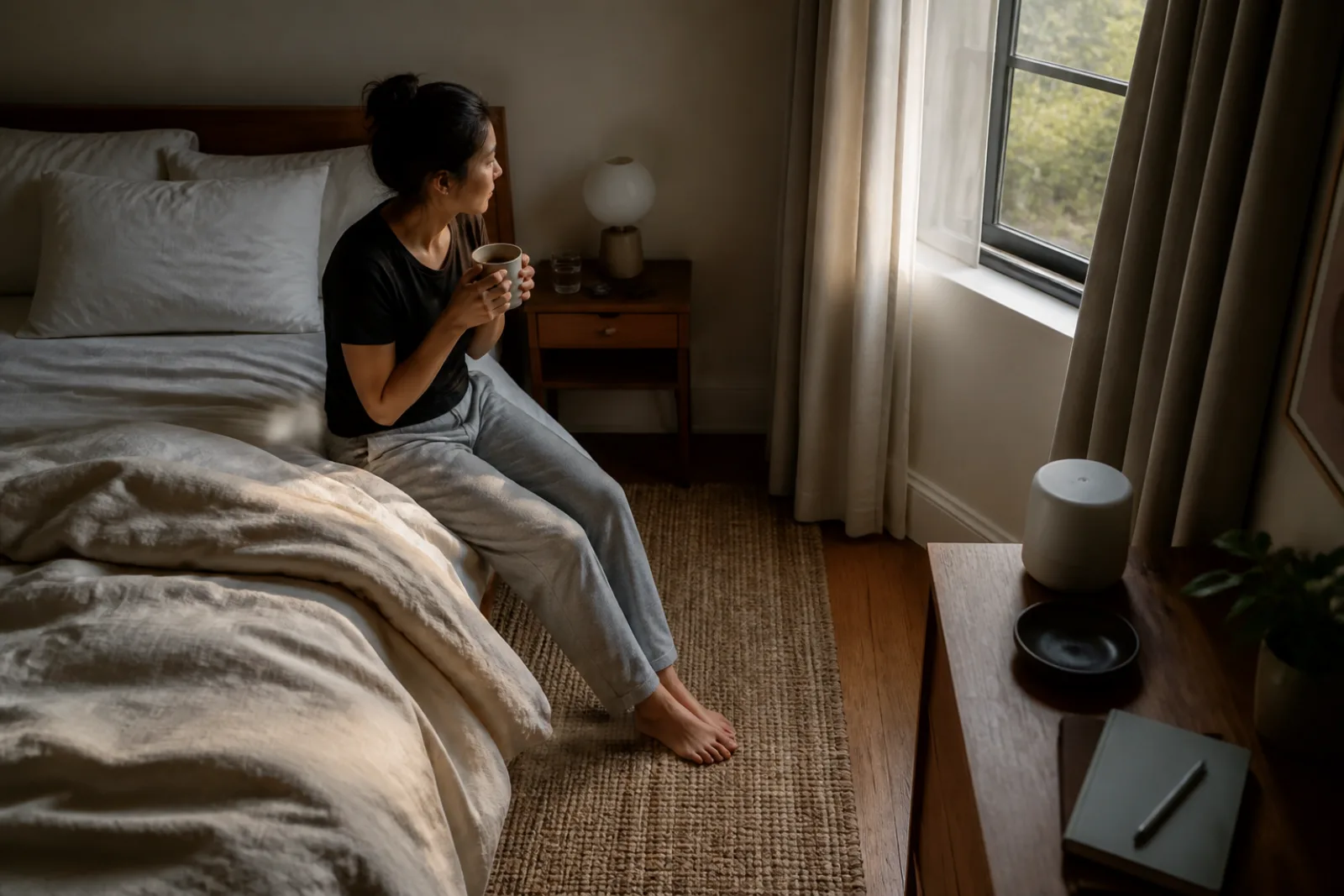
Keep a stable sleep and wake time, make the room dark and quiet, and use the hour before bed without bright screens. If sleep stays difficult after that, talk to a clinician rather than buying another gadget.
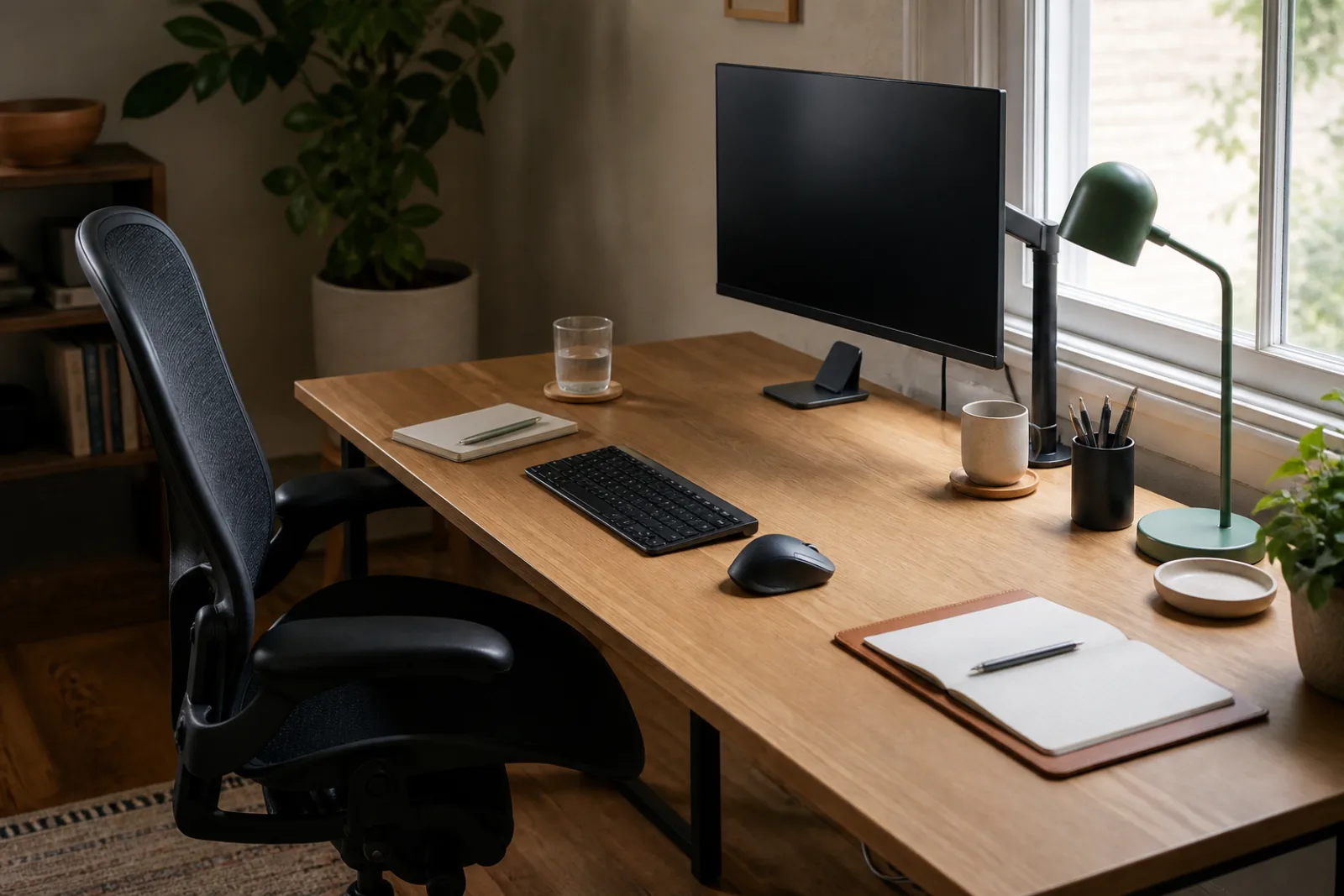
Put daily tools in the arc your hands already travel. Give writing and typing separate real estate, or a closing laptop. Keep a clear patch the size of a notebook. If you have to stack the desk to start work, the layout failed.
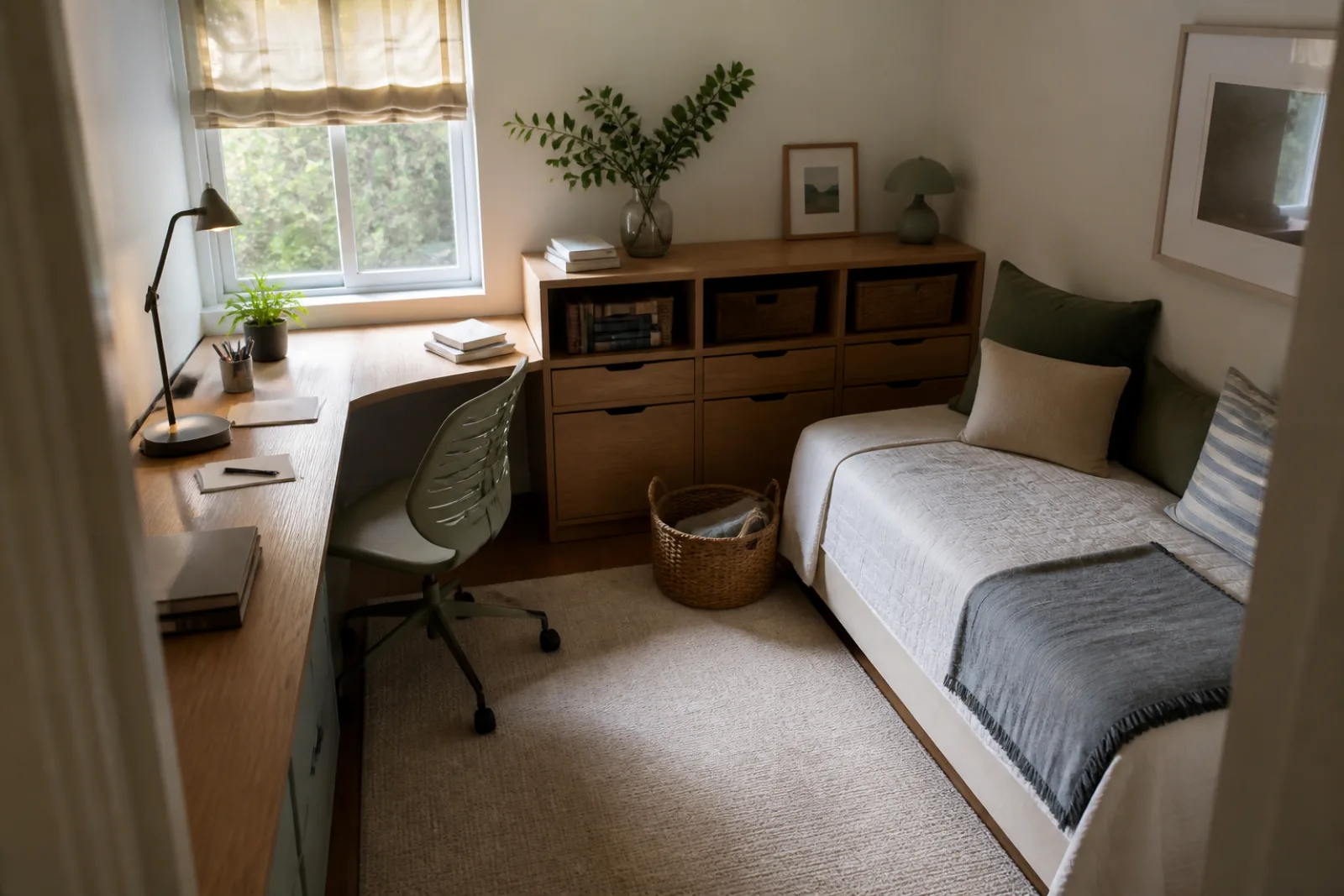
Keep a walking path, give guests a closed drawer or bin that is empty for them, and make the bed a surface you can actually use the other 50 weeks. If conversion means moving a dresser, the room will stay stuck.
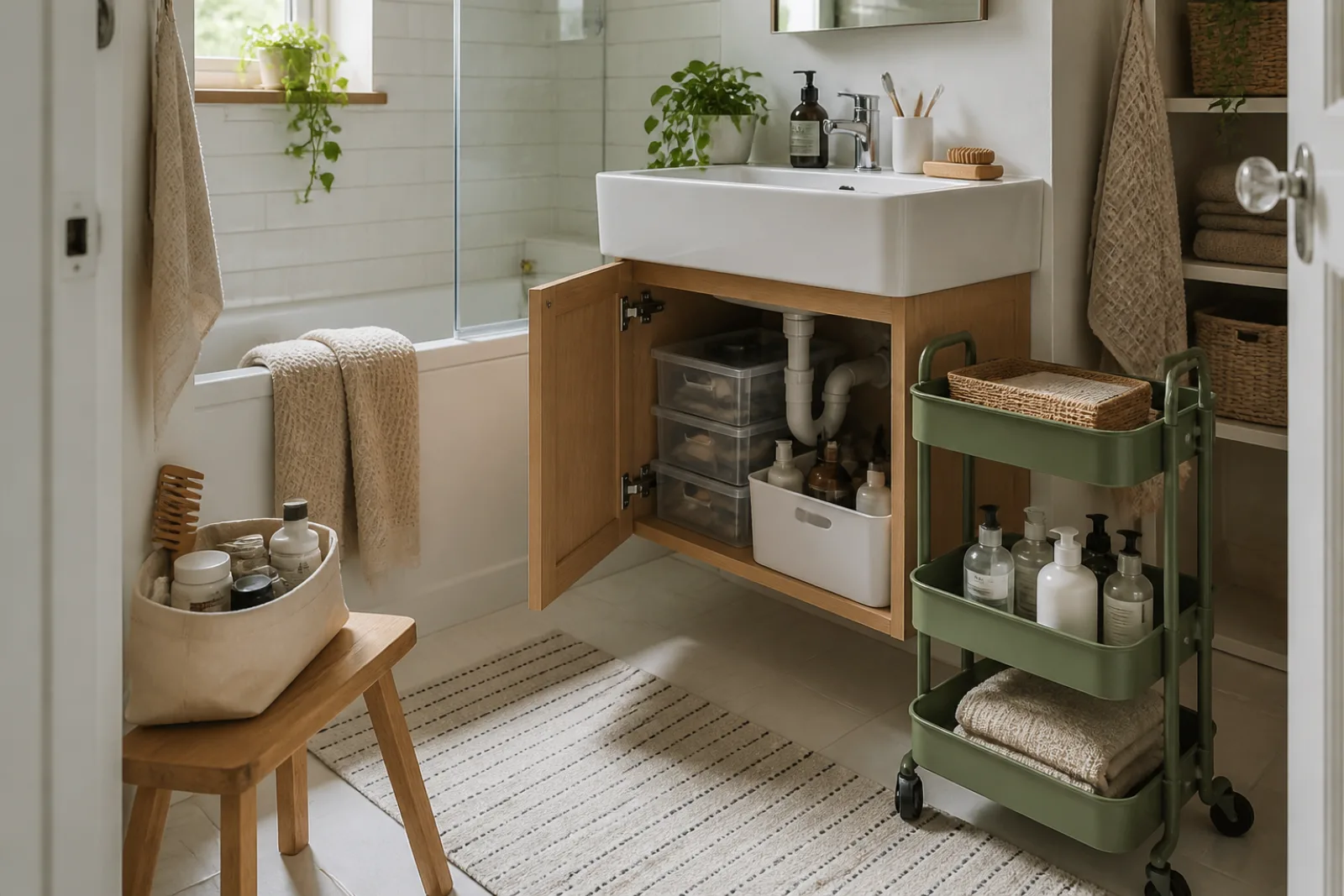
A small bathroom holds two environments in one room: a merely humid sink area and a shower that spikes past 70 percent humidity. Storage should follow that split, not just square footage.
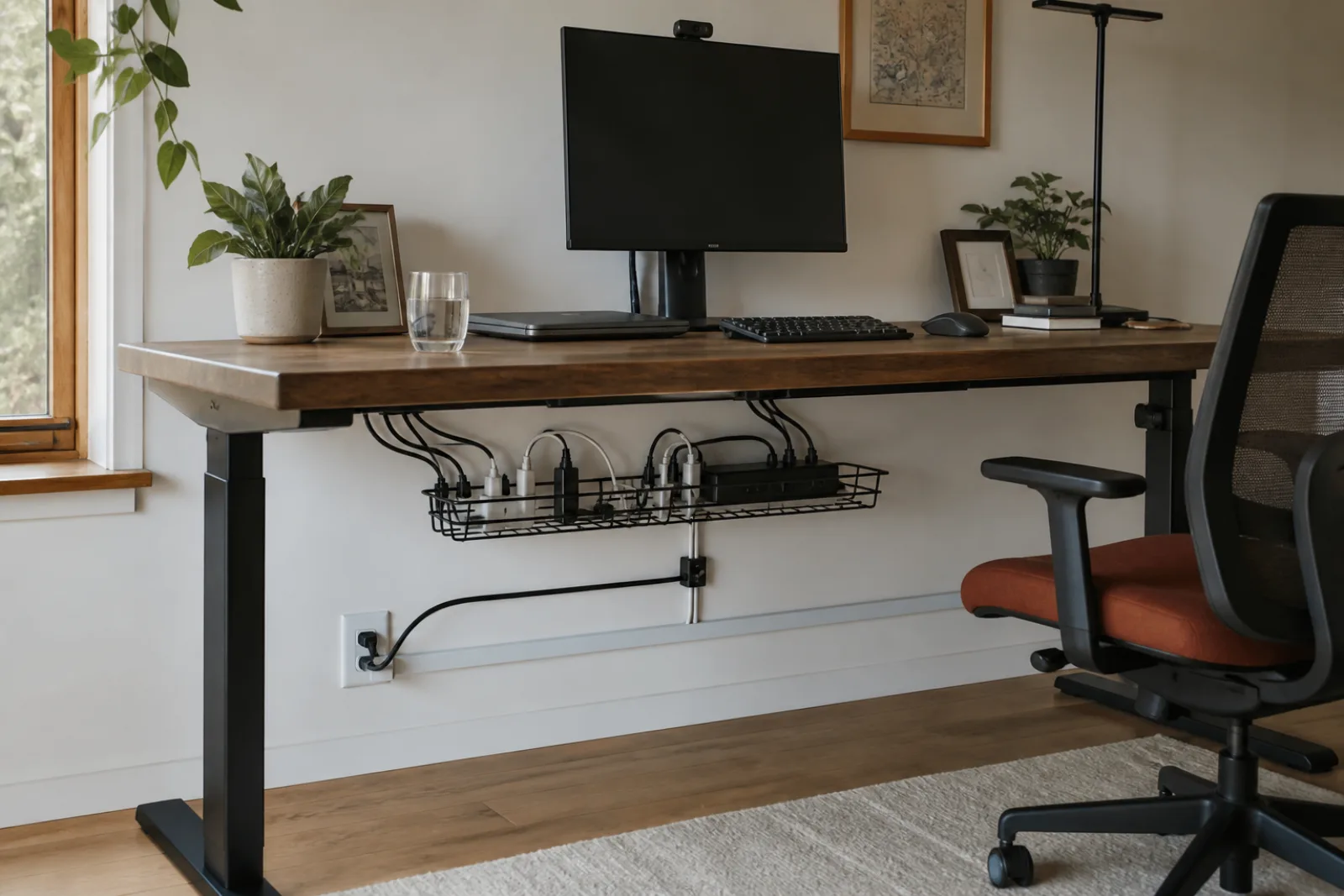
Move power under the desk, use one strip or dock, keep only short leads on the work surface, and label both ends. Clips without a power plan are decoration on a tangle.
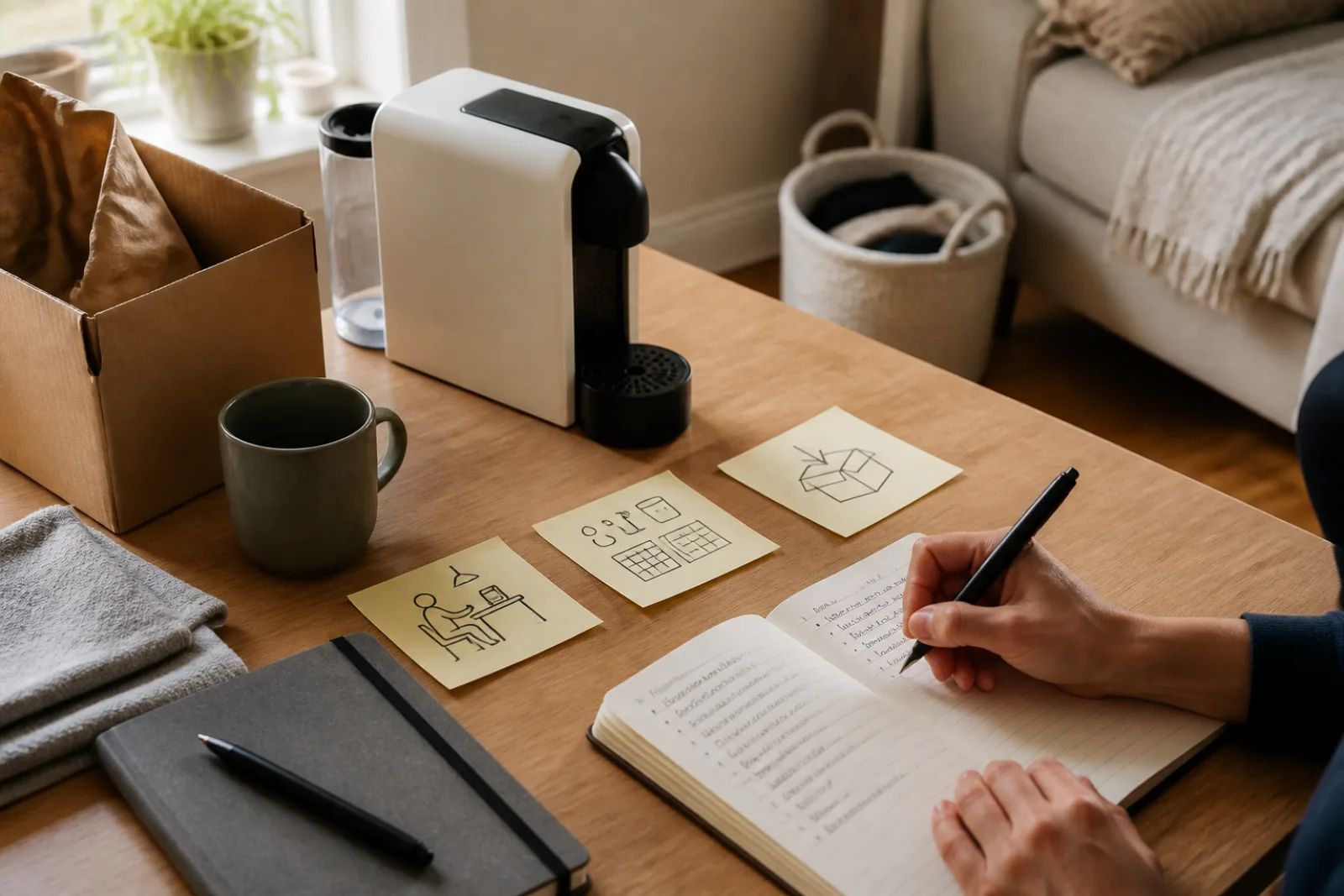
A household buying rule works by making you write down the use case, the upkeep, and what gets displaced, before a waiting period even starts, not by relying on willpower alone.
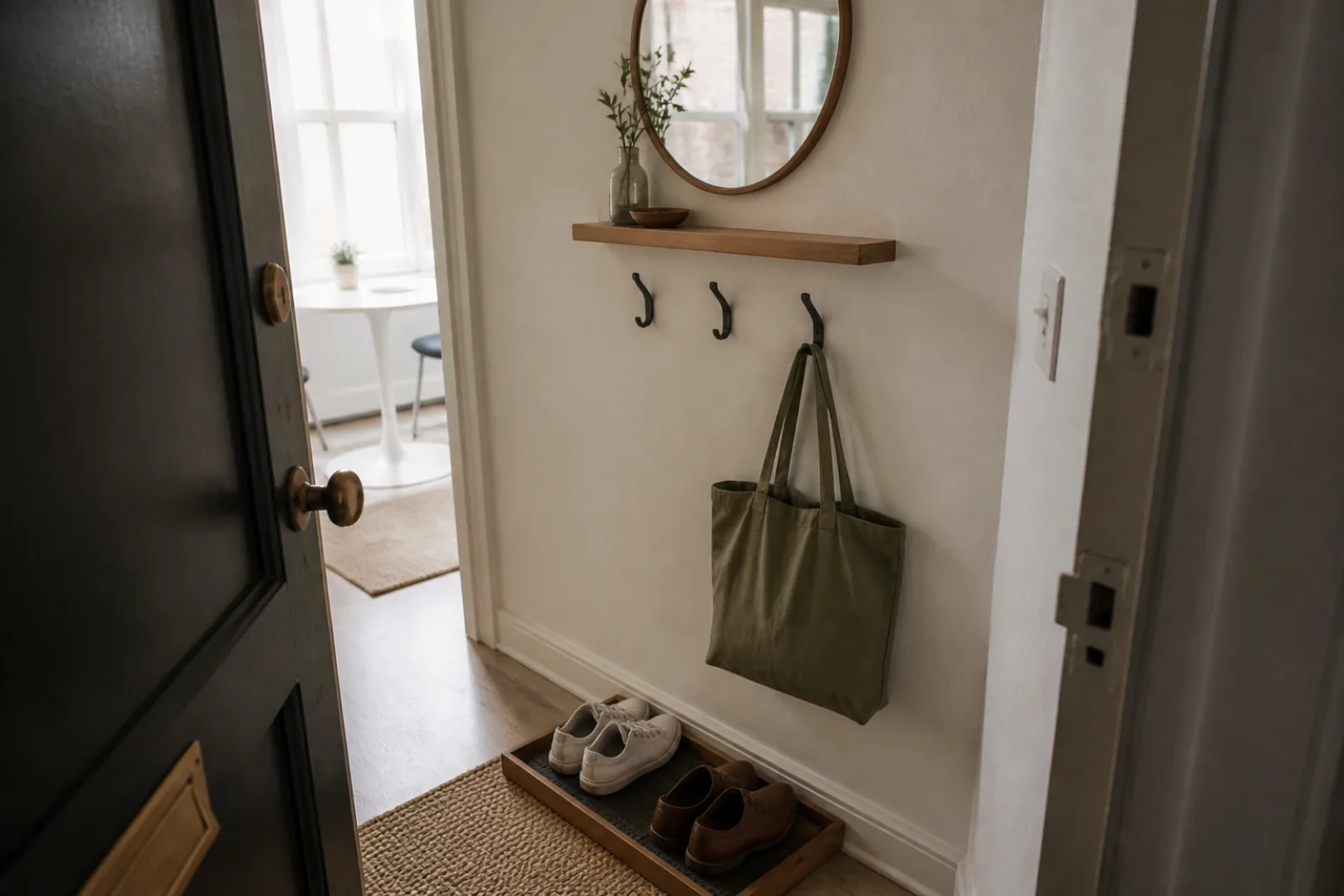
A small entryway fails when one surface tries to do three jobs at once. Split it into a landing spot, closed shoe storage, and an outgoing zone, and even 30 inches of hallway can work.
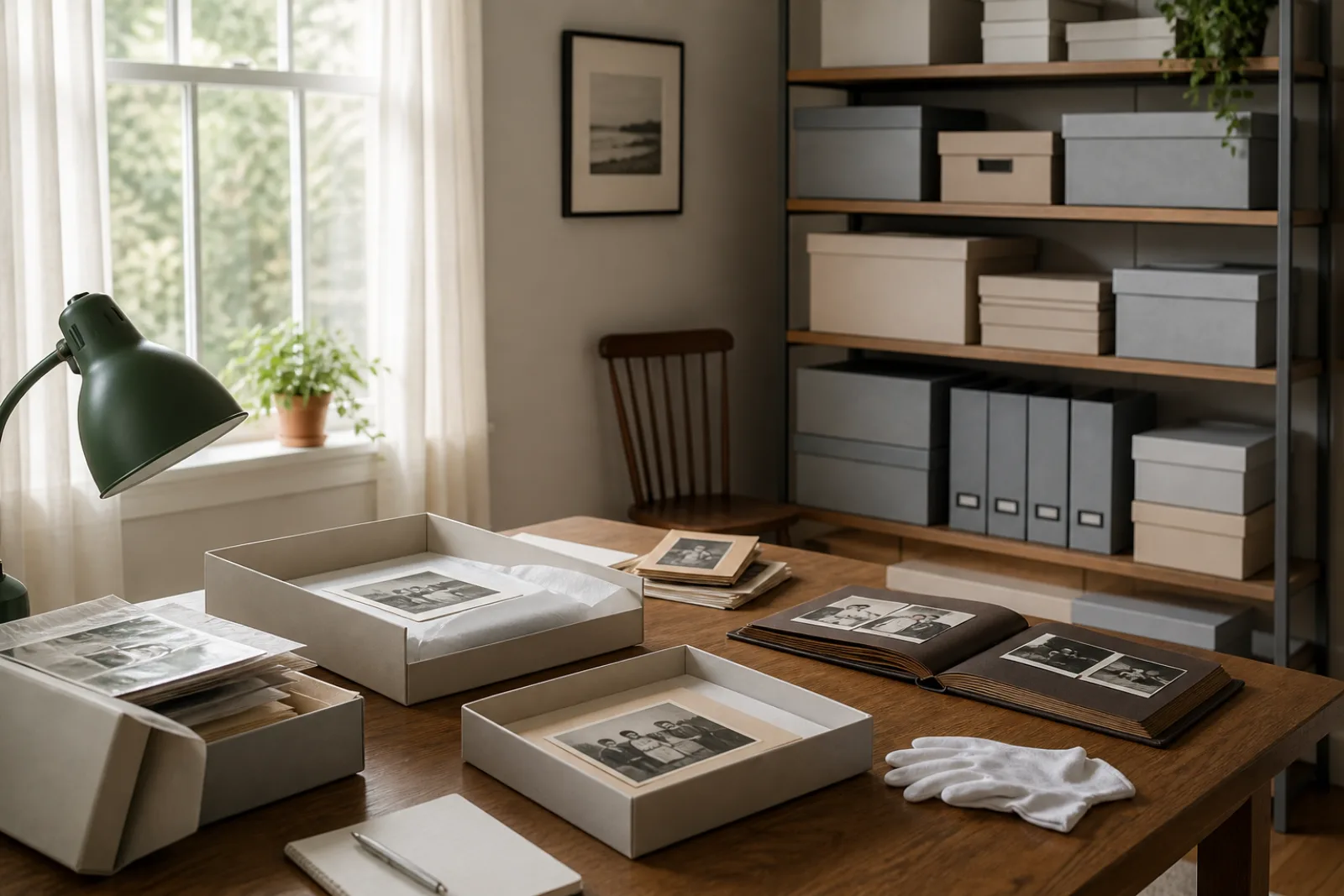
Keep prints cool, dry, and stable; sleeve them in PAT-tested enclosures; never use magnetic albums. Label the sleeve, not the image. Attics and basements are where family photographs go to fade.
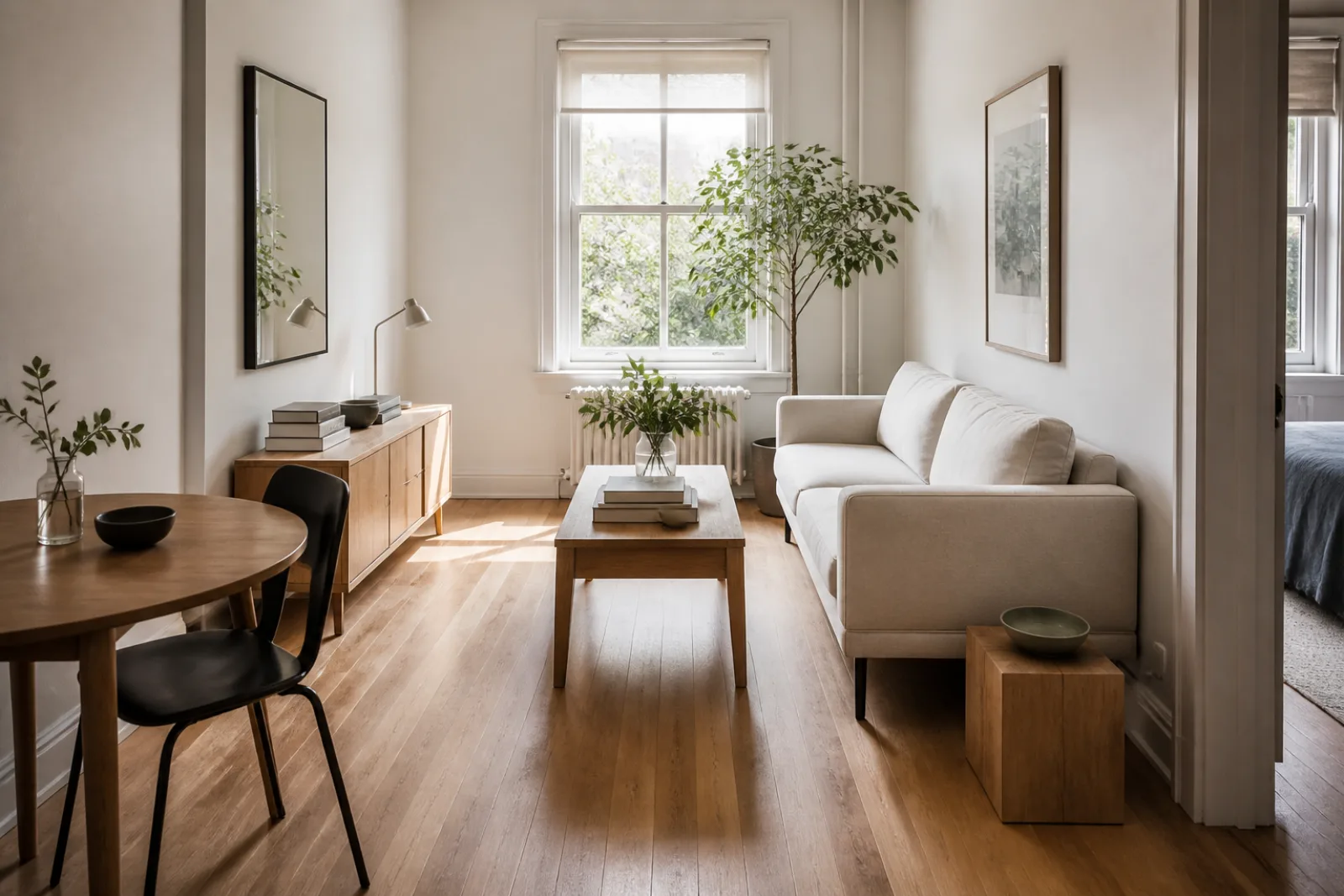
Show the floor, keep one wall color, put furniture on legs, and stop blocking the window. Mirrors move light; they do not add square footage. Undersized furniture makes a small room look like a leftover.