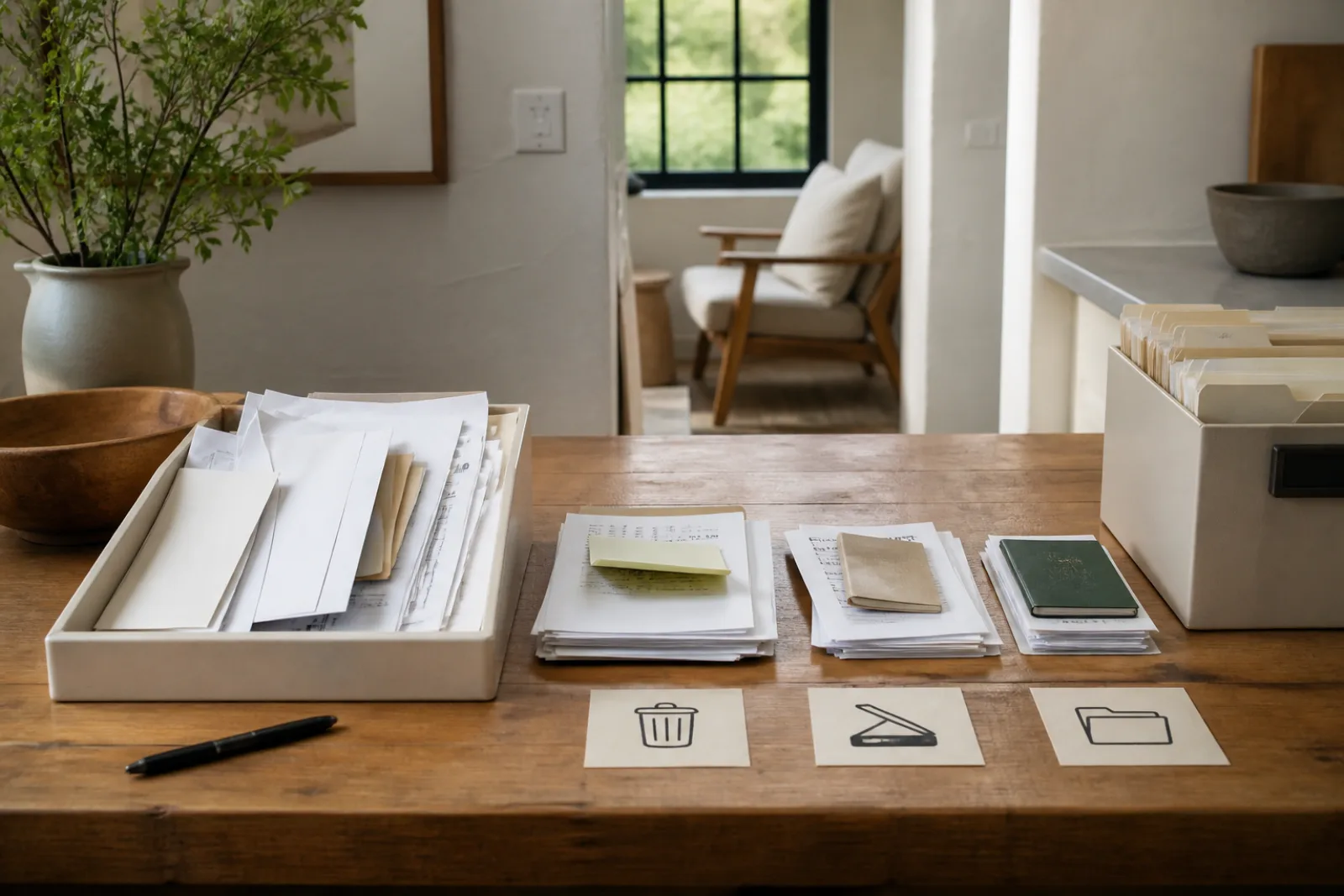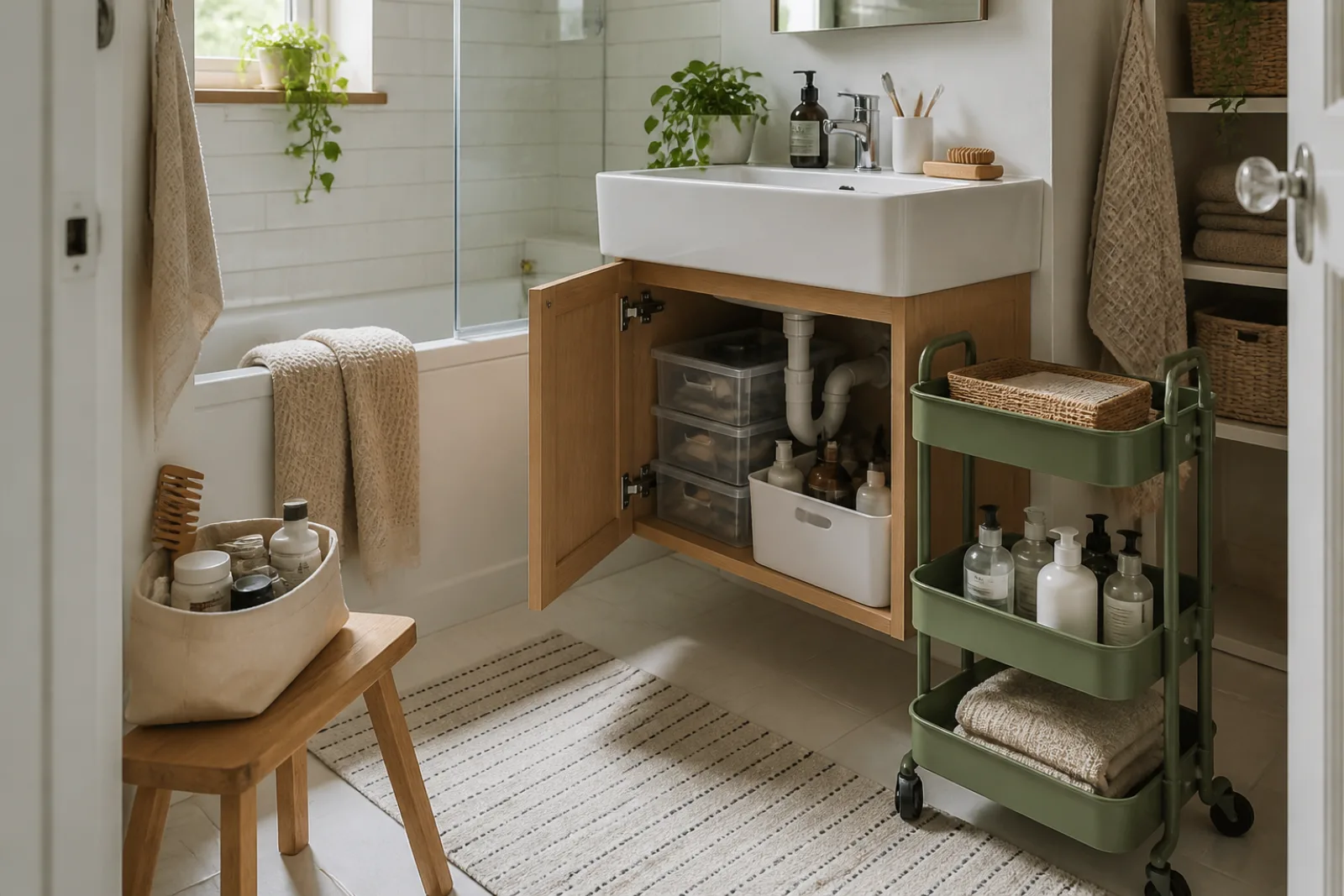
A kitchen counter fills up because it's the easiest flat surface in the house: mail lands there, appliances that have no other cabinet stay there, and once one thing sits out permanently, everything else treats the counter as fair game. The fix isn't a single decluttering session, it's assigning every object a frequency and a home, so nothing has a reason to default to the counter in the first place.
Start by clearing the counters completely, every appliance, every mail pile, everything, and putting each item back only after it passes one test: how often does this actually get used?
Daily items stay out: a coffee maker used every morning, a dish soap pump, a knife block or magnetic strip, a cutting board used most nights. These earn permanent counter space because pulling them out of a cabinet every single time would add real friction to cooking.
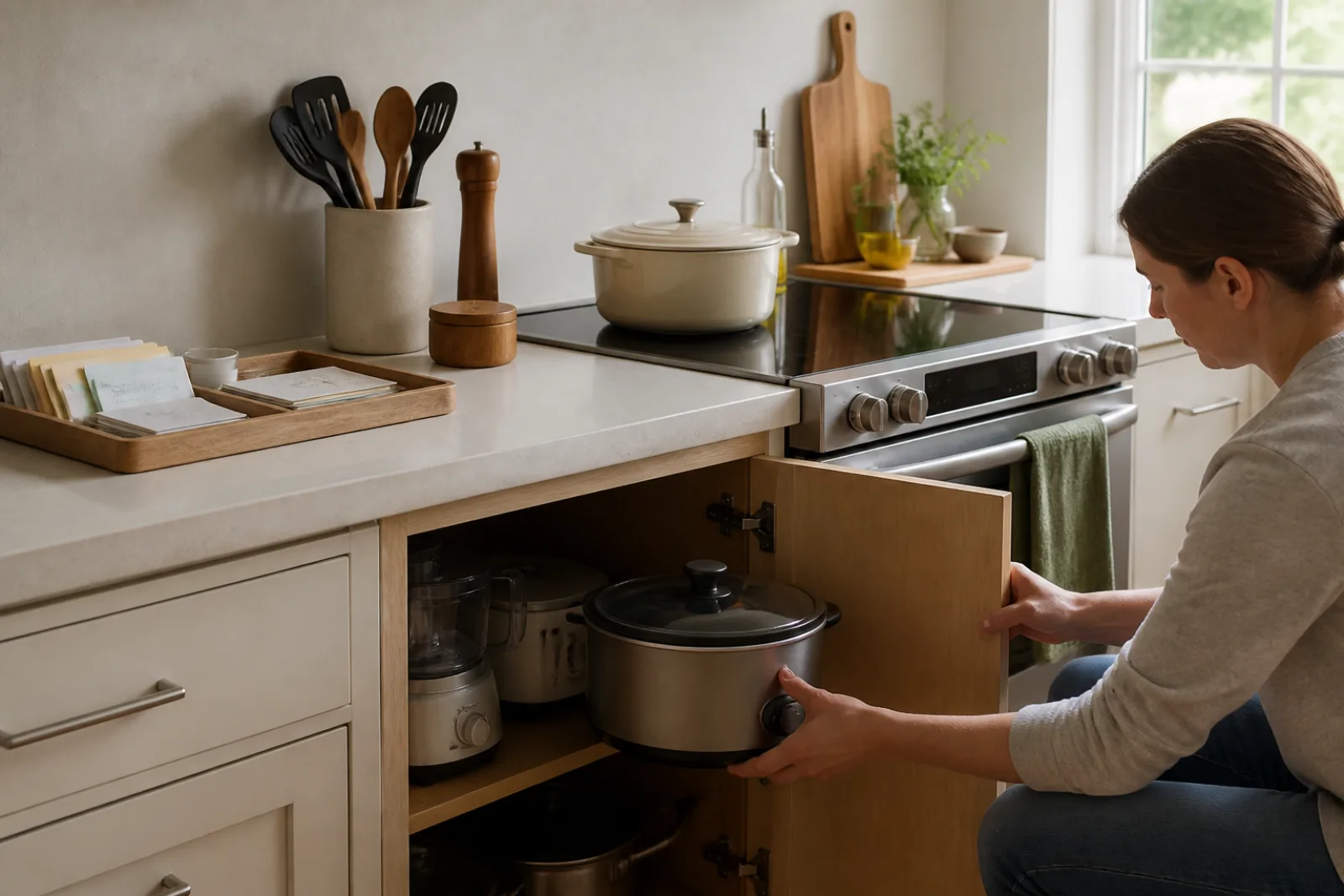
Weekly items go in a cabinet, but a specific one, not wherever there's room. A stand mixer, blender, or toaster oven used once or twice a week belongs on its own shelf, ideally a lower cabinet near an outlet, so putting it away takes ten seconds instead of a wrestling match with other pots.
Occasional items, a turkey roaster, waffle iron, ice cream maker, fondue pot, don't belong in the kitchen's prime real estate at all. A high cabinet, a pantry shelf, or even a garage or basement shelf works, since these get pulled out a handful of times a year at most.
Pick one stretch of counter, ideally next to the stove or the primary cooking area, and treat it as off-limits for anything that isn't active food prep. A standard cutting board runs about 18 by 12 inches; the zone around it needs roughly 24 to 30 inches of clear counter to actually work, room for the board, a bowl for scraps, and elbow room. Nothing gets set down there for a second, not mail, not a phone, not a bag from the store. The rule only works if it's absolute; a prep zone that's clear 80 percent of the time gets treated as available space the other 20 percent, and the habit collapses.
Five zones sorted by how often their contents are actually used.
- 01Prep zone, next to the stove
24-30 inches clear at all times, for active cooking only, nothing set down 'for a second'
- 02Daily appliance zone
Coffee maker, knife block, dish soap; items used every day stay out permanently
- 03Cabinet shelf near an outlet
Weekly appliances (stand mixer, blender, toaster oven) live here, not on the counter
- 04High cabinet or pantry shelf
Occasional-use items (turkey roaster, waffle iron) stored away from daily counter space
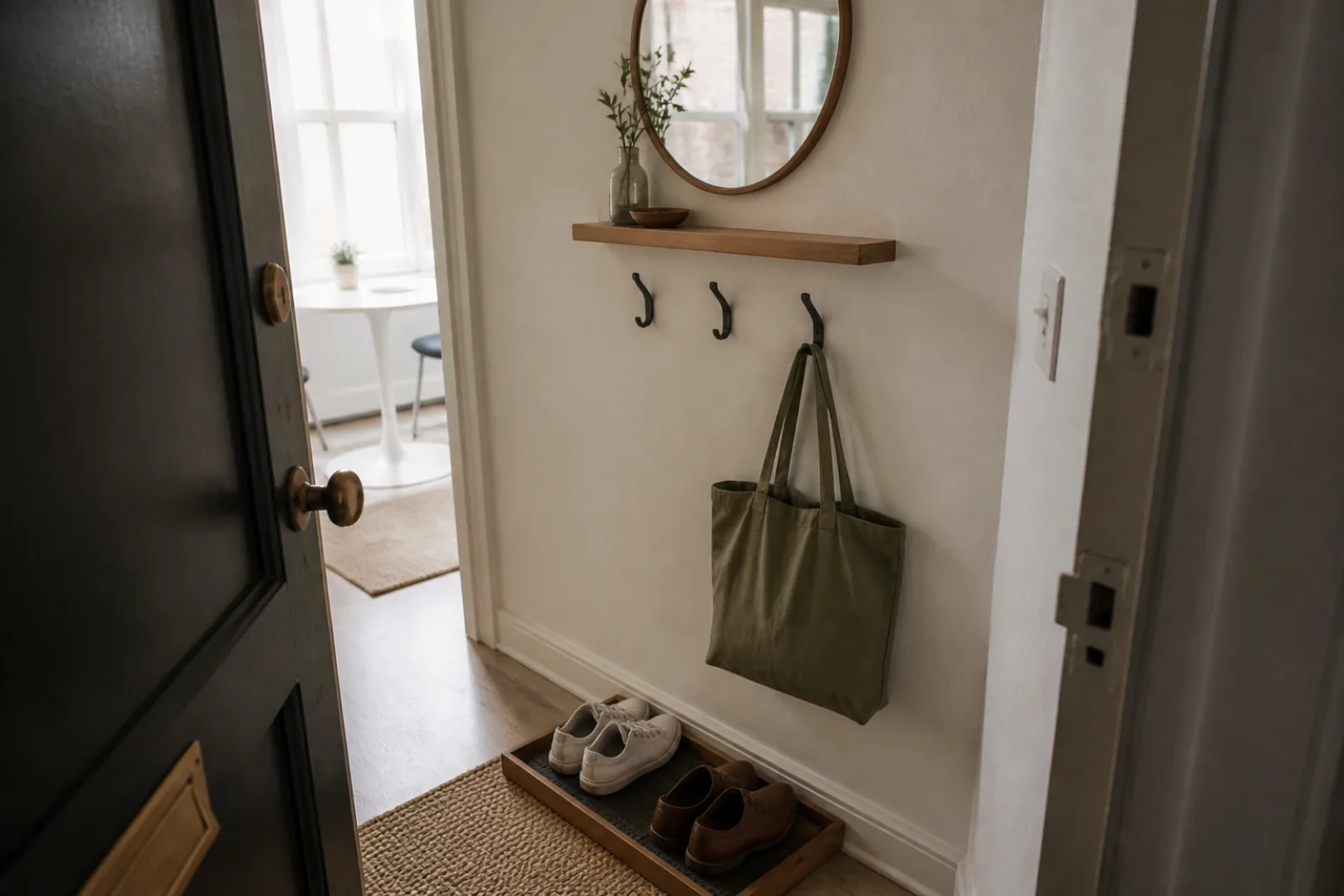
- 05Landing tray, elsewhere in the house
Mail and keys get their own spot outside the kitchen so they stop defaulting to the counter
Reclaiming the Counter
- 01Clear every counter completely
Appliances, mail, everything, off the counter and onto the kitchen table or floor for sorting.
- 02Sort by frequency
Daily, weekly, or occasional, for each item, honestly, not by how convenient it currently feels.
- 03Assign a cabinet home to weekly and occasional items
A specific shelf, not 'somewhere in the pantry.'
- 04Return only daily items to the counter
Everything else goes to its assigned cabinet before the counter is considered done.
- 05Mark off the prep zone
Physically clear 24-30 inches next to the stove and treat it as off-limits to anything but active cooking.
- 06Run a two-minute nightly reset
Wipe down and clear anything that landed on the counter during the day before bed.
Counters that stay cluttered are often also counters that are annoying to clean, which makes the clutter worse in a loop: crumbs and grease sit under an appliance nobody wants to move, so nobody wipes under it, so it looks worse, so more gets piled on top to hide it. A silicone mat or tray under daily appliances (coffee maker, toaster) lets you lift the whole tray to wipe underneath in one motion instead of moving each appliance individually. For appliances with cords, a binder clip or a cord-wrap on the back keeps the cord from snaking across the counter and catching on things when you reach past it.
Kitchen Counter Reset Checklist
- 01Every appliance passed the frequency test: daily, weekly, or occasional
- 02Weekly and occasional appliances have an assigned cabinet shelf, not 'wherever fits'
- 0324-30 inches of counter next to the stove kept clear for active prep only
- 04Mail and keys land somewhere outside the kitchen, not on the counter
- 05A wipeable mat or tray sits under daily appliances for faster cleaning
- 06A two-minute nightly reset clears anything that landed on the counter that day
Questions
- 01What if I genuinely don't have enough cabinet space for a stand mixer or similar large appliance?
A rolling cart or a shelf added inside a pantry door adds cabinet-equivalent storage without using counter space. The goal is getting the appliance off the counter, not necessarily into an existing cabinet.
- 02How small can the prep zone be and still work?
A cutting board plus a few inches on each side, around 20 inches total, is workable in a genuinely tight kitchen, though 24 to 30 inches is more comfortable for two-handed prep like chopping vegetables.
- 03What about small appliances I use most days but not literally every day, like a blender for smoothies three times a week?
Treat 'most days' as daily for this purpose. The frequency sort is about avoiding friction, not being literal about seven-day counts. If putting it away and pulling it back out would genuinely annoy you three times a week, it can stay on the counter.
The Short Version
- 01
Sort every counter item by real frequency of use: daily stays out, weekly gets a specific cabinet shelf, occasional goes to a high cabinet or pantry.
- 02
Protect one 24-to-30-inch stretch of counter, usually next to the stove, as an absolute no-clutter prep zone.
- 03
Mail, keys, and other non-kitchen items need a landing spot outside the kitchen, or they'll keep defaulting to the counter.