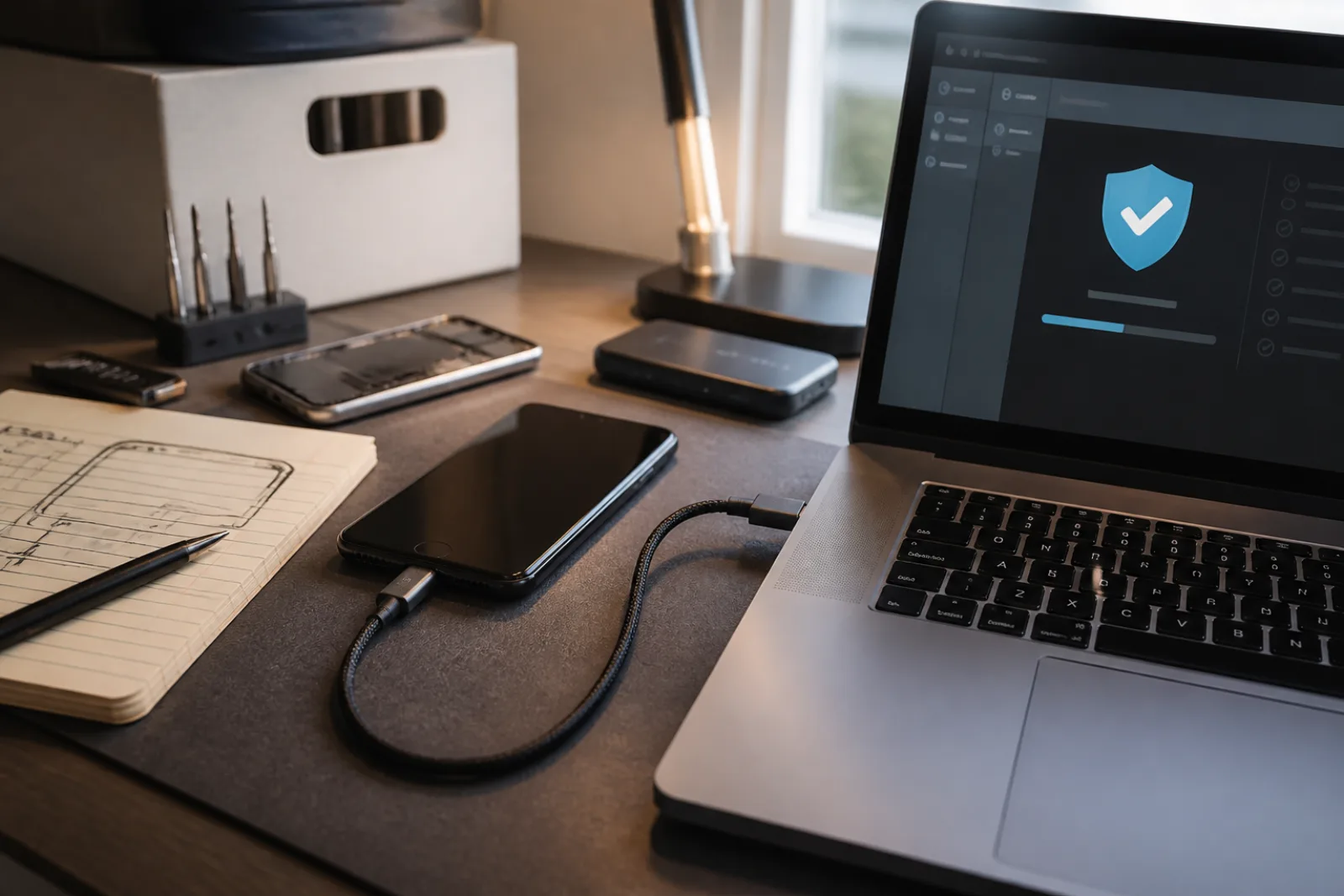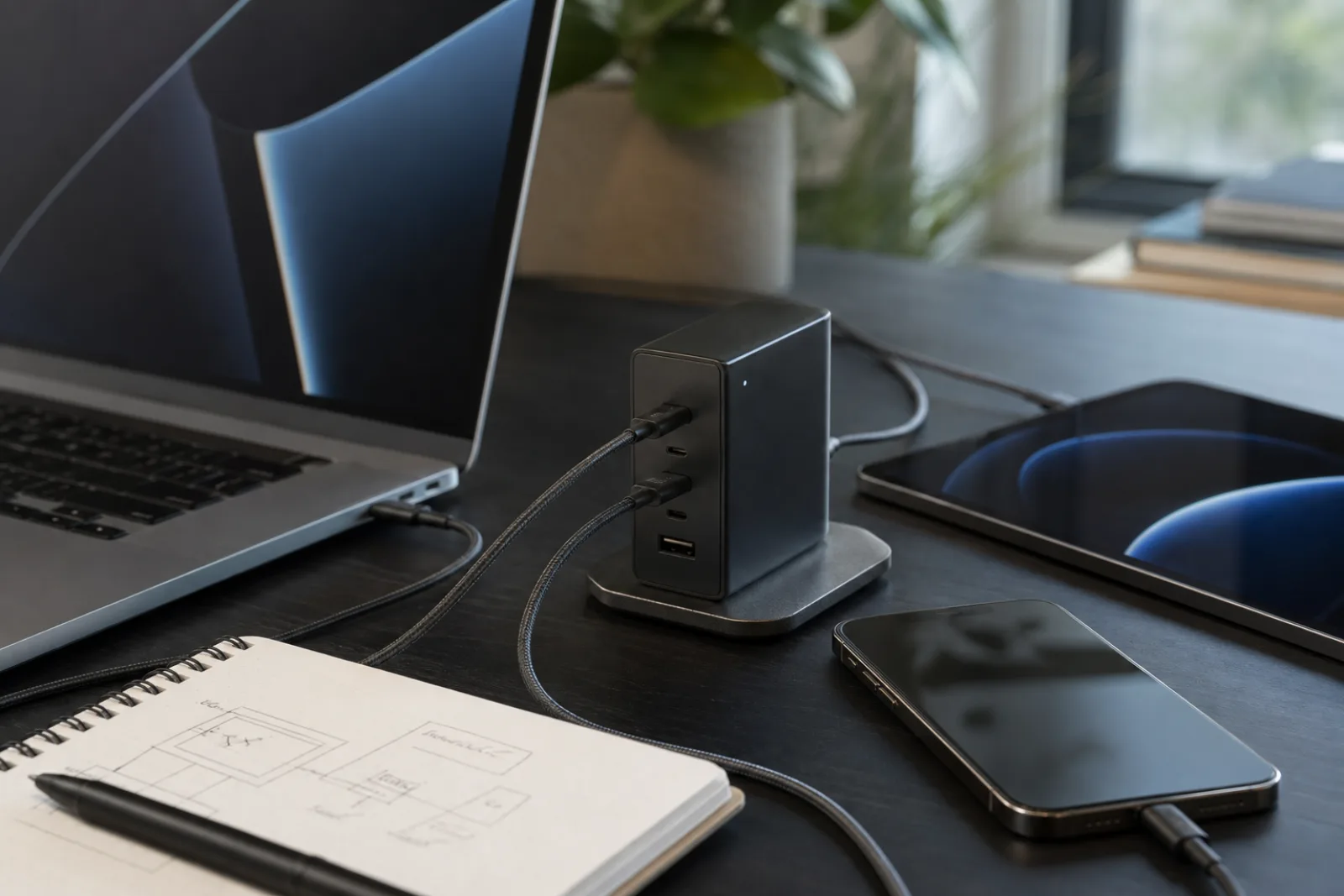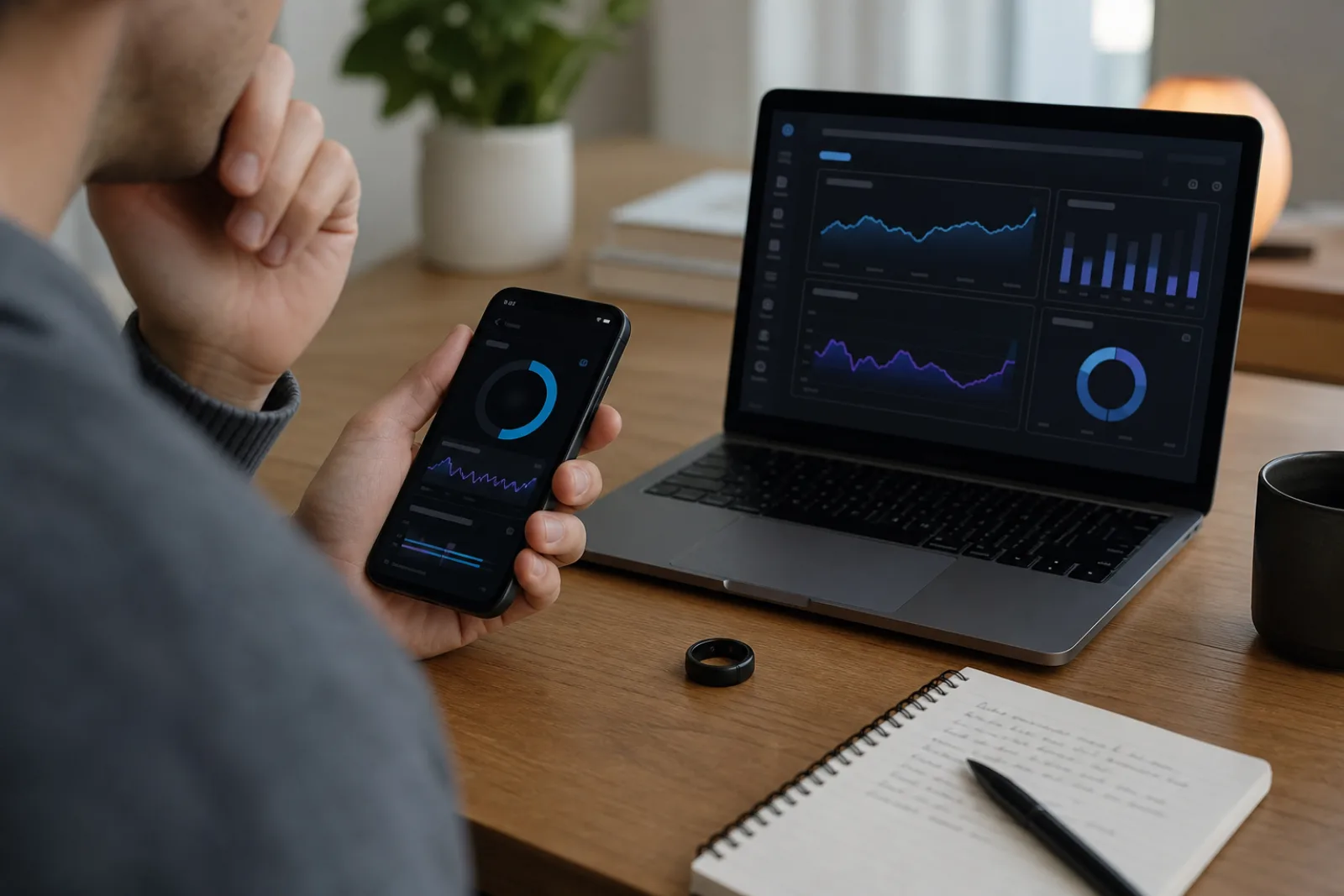
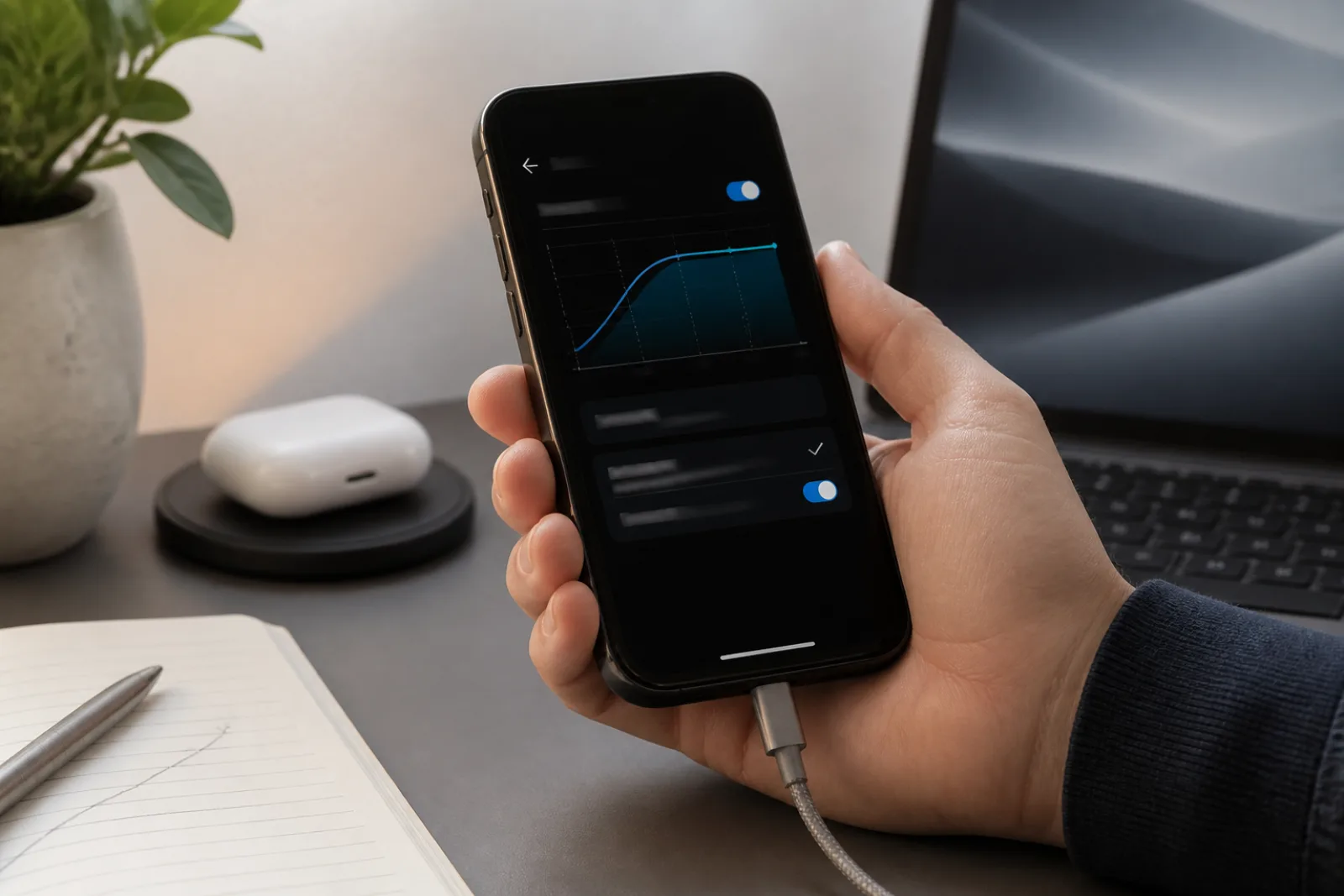
A phone that shows 80 percent at 11 PM and 100 percent right as your alarm goes off is not charging slowly. It is doing exactly what Optimized Battery Charging was designed to do: deliberately delaying the last stretch of charging because sitting at a full 100 percent for hours is one of the more chemically stressful states for a lithium-ion battery, more so than sitting at a partial charge. The feature is a genuine trade-off between battery longevity and having a full charge available at every moment, not a malfunction or a throttled charging speed.
Keep the hold, or finish to 100
Is tonight the same night the phone has learned?
- 01Usual overnight, usual morning
Leave optimized charging on. The pause near 80 percent is the feature, not a bug.
- It is still at 80 percent at 11 PMThat is the hold. It should finish close to the learned unplug time.
- 02Early flight, odd morning, or a day that is not the routine
Override for that night. One full charge does not undo months of reduced time at 100 percent.
- My schedule is different most daysThe predictor has less to learn. Manual charge limits, if the phone offers them, are the more honest control.
- 03I want 100 percent every evening as a comfort
You can. You are choosing time spent at a chemically stressful state over a slightly slower aging curve.
- I will turn the feature off permanentlyKnow that the cost is measured in years of capacity, not in how long tomorrow's charge lasts.
A typical optimized overnight charge cycle
- 10:00 PMPhone plugged in
Charging proceeds normally at first, following your typical pattern.
- ~11:30 PMCharging pauses around 80%
On-device learning has predicted, based on your routine, that the phone will remain connected for several more hours.
- OvernightBattery holds near 80%
The battery spends the bulk of the night below full charge, reducing time spent in the most chemically stressful state.
- ~6:30 AMCharging resumes to 100%
Timed to complete shortly before your predicted wake or unplug time, based on your learned routine.
Apple Support: About Charge Limit and Optimized Battery Charging on iPhone.
The mechanism behind this is specific, not just a general "be gentle to the battery" gesture. Lithium-ion batteries, the type used in essentially all modern phones, age through a chemical process that accelerates at both temperature extremes and at high states of charge. Sitting at 100 percent for an extended period is measurably more stressful to the battery's long-term capacity than sitting at, say, 80 percent for the same duration. Optimized charging directly targets the specific, avoidable part of that stress: the hours spent fully charged with nowhere for that energy to go, which is exactly what happens during a typical overnight charge that finishes at 11 PM and sits untouched until a 7 AM alarm.
The feature's real limitation is that it depends on a learned, fairly consistent routine to predict when you'll actually unplug. Apple's own documentation is direct that the prediction comes from on-device learning of your typical charging pattern, and a schedule that changes significantly day to day gives the system less to learn from, making the feature activate less reliably or less usefully. This is also exactly the situation where manually overriding it makes sense: if you know tonight is different from your usual routine, an early flight, an unusually early morning, the learned prediction for a normal night is the wrong one to rely on, and charging to 100 percent on demand for that one night is a reasonable, occasional trade against the feature's long-term benefit.
The short version
- 01
Optimized charging deliberately reduces time spent at 100% because that state, not a full charge itself, is what accelerates lithium-ion battery aging over the long term.
- 02
The feature learns your routine and predicts when to finish charging; it works less predictably if your schedule varies significantly day to day.
- 03
Overriding it makes sense on specific nights when you know your routine will differ from usual, not as a permanent setting change for most daily use.
Questions
- 01Does optimized charging slow down how fast my phone charges overall?
It changes the timing and pattern of when charging completes, holding at a partial charge for longer before finishing, but it does not reduce the maximum charging speed available when the phone is actively charging toward its target.
- 02Should most people leave optimized charging on all the time?
For typical daily use with a fairly consistent charging routine (like overnight), leaving it on is the lower-effort choice that provides a genuine long-term battery health benefit; turning it off is worth reserving for specific situations where you know you'll need a full charge earlier than your normal pattern.