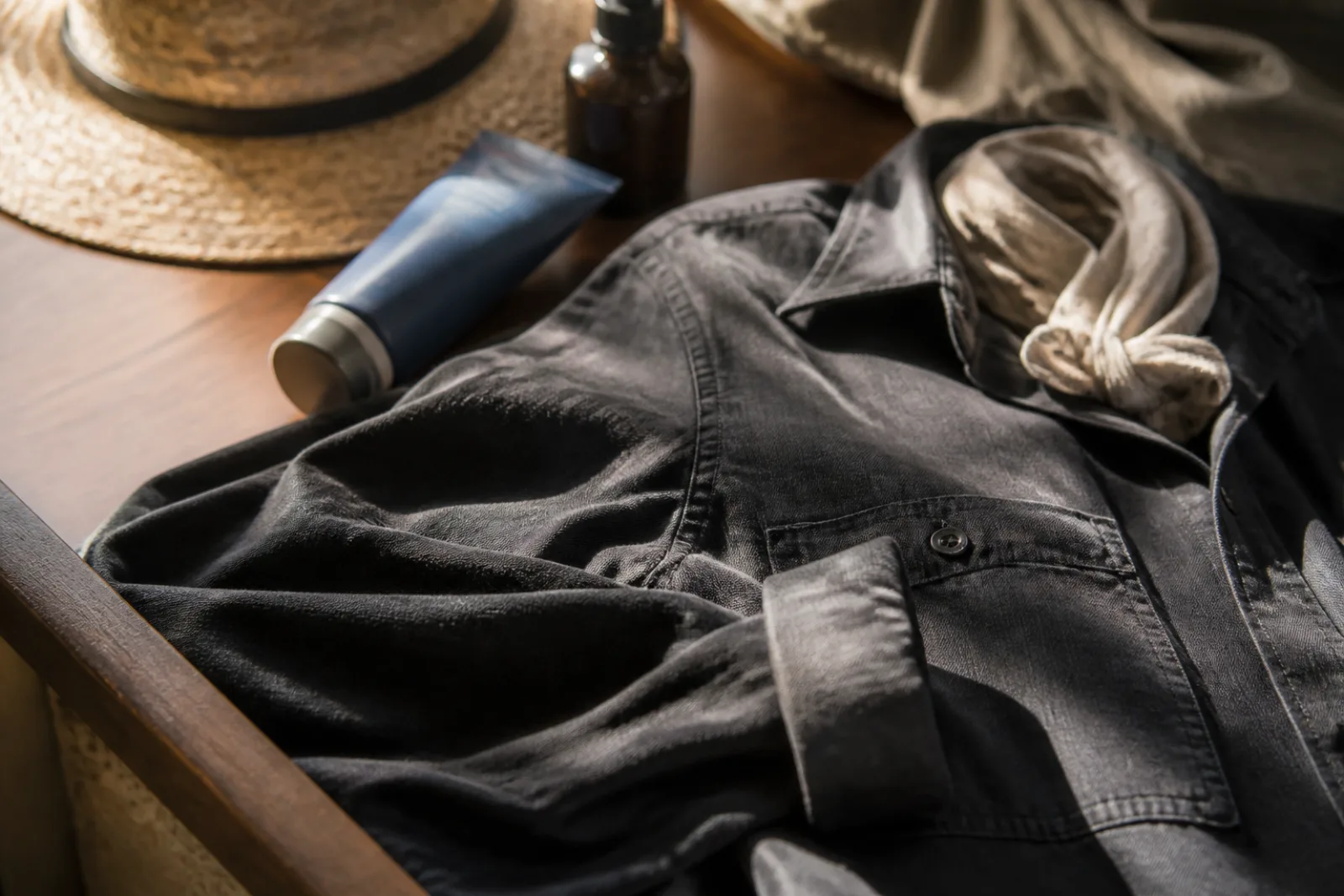
A weekday outfit is already doing sun-protection work, or it is not. A tightly woven long sleeve covers the arms. A baseball cap covers the crown and leaves the ears and neck in the open. A dress that ends above the knee leaves the legs. FDA's sunscreen directions treat clothing as one of the 'other sun protection measures' you use with the product, not as a reason to skip the product on whatever the cloth does not hide.
The daily question is therefore a map: what does this outfit leave out, and can you still reach those patches at lunch if you are outside? How to read a sunscreen label is the Drug Facts literacy. This page is where the bottle meets the collar.
- Apply
- Liberally or generously, 15 minutes before sun exposure. Labels may add: apply to all skin exposed to the sun.
- Companion measures (Broad Spectrum SPF 15+)
- Limit time in the sun, especially 10 a.m. to 2 p.m. Wear long-sleeved shirts, pants, hats, and sunglasses.
- Reapply
- At least every 2 hours when using the product as directed for continued outdoor time. Water-resistant formulas add a 40- or 80-minute swim/sweat line and 'immediately after towel drying.'
- What the product cannot claim
- That it blocks all UV, or that clothing makes the bottle optional on uncovered skin.
21 CFR 201.327, accessed 2026-08-12
Do this check in a mirror in the clothes you actually commute in, not in a ski base layer.
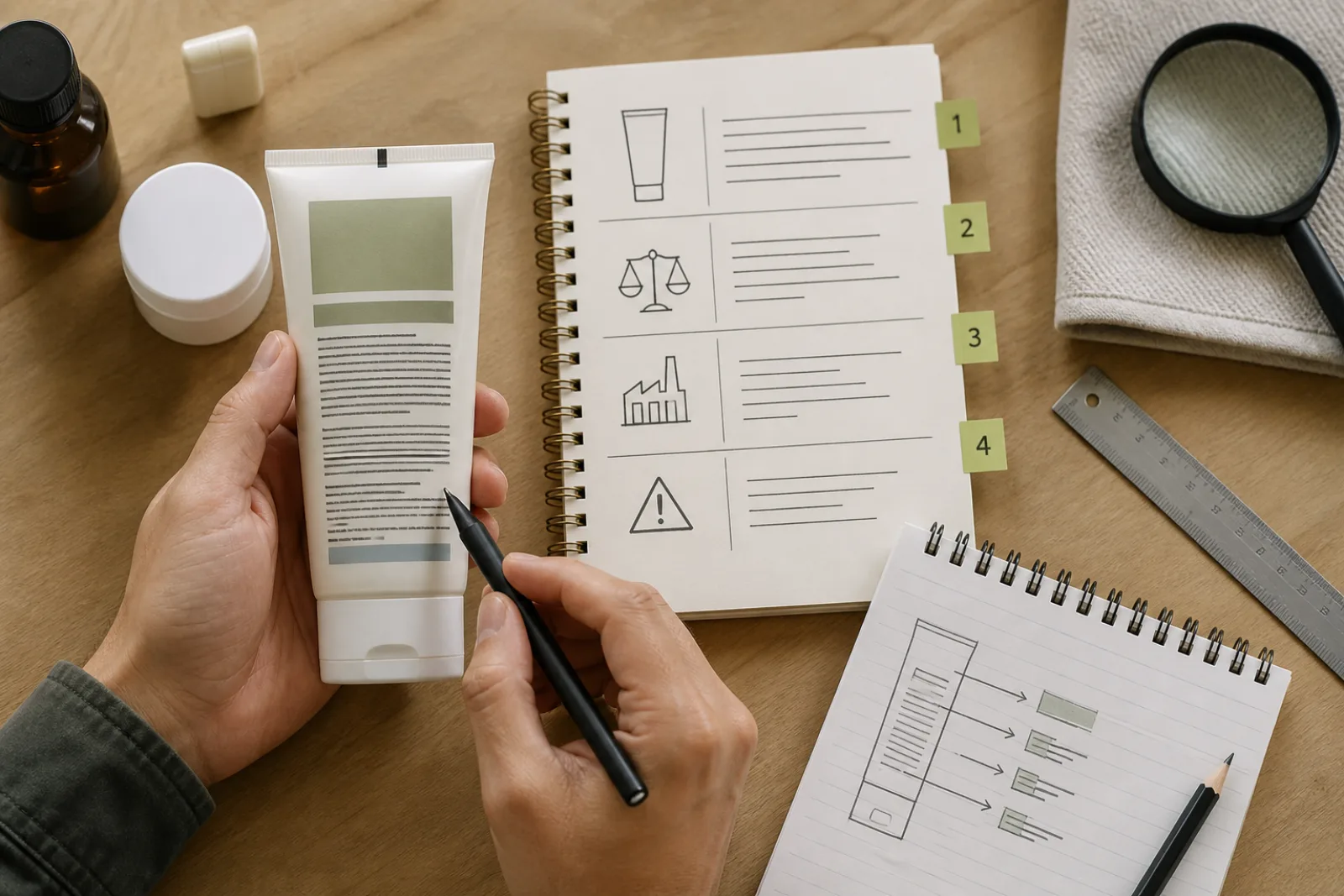
- 01Face, ears, neck
A cap is not a wide-brim hat. Ears and the back of the neck are the usual miss. A collar helps only as high as the collar.
- 02Hands and wrists
Sleeves ride up. Driving puts the backs of the hands in a windshield for an hour. Include them if that is your morning.
- 03Part line and scalp
Hair is not a hat. A part, a thinning crown, or a short cut needs product or a real brim.
- 04Gap at the hem
Ankles under cropped trousers, a midriff when you reach, a V-neck. If it can see sky, it counts as exposed.
Fabric is not binary shade. A dry, dark, tightly woven shirt blocks more UV than a wet white linen. The American Academy of Dermatology points people toward garments with an ultraviolet protection factor (UPF) number when they want clothing that is actually rated. A fashion tee without that number can still help. It is not a measured substitute for the skin it does not cover, and it is a weaker substitute when it is thin or soaked with sweat.
Makeup with SPF is easy to under-apply and hard to reapply. If the face is the main exposed area on a workday, a dedicated sunscreen under the makeup, in the amount you would use without makeup, is the honest layer. Tinted product can be part of that if you put on enough. A swipe of SPF foundation is not the labeled 'generous' application.
Clothes and sunscreen also fight in the laundry. Stains on collars are often leftover product plus sebum. Let the face and neck film set before you pull a light-colored crewneck on. A mineral formula can leave a cast on dark fabric; apply, wait, then dress. Do not use that stain as a reason to skip the neck. Use a darker undershirt or a formula you have already tested on the inside of a hem.
| What you are wearing | Mostly handled by cloth | Still on you to cover |
|---|---|---|
| T-shirt, shorts, sneakers | Torso, upper arms, upper legs if the cloth is not sheer | Face, neck, ears, lower arms, lower legs, hands, any scalp showing |
| Long-sleeve button-down, trousers, loafers | Arms and legs, if sleeves stay down | Face, ears, neck, hands, any gap at the cuff or ankle |
| Wide-brim hat plus long sleeves | Crown, much of the face's top half, arms | Lower face if the brim is narrow, neck if no cape or collar, hands |
| UPF shirt, advertised as sun clothing | The rated coverage area, when dry and used as intended | Everything the garment does not cover; wet fabric if you swim in it |
Cover, then product the rest
- 01
Use the outfit as coverage. Use sunscreen on every patch that can still see the sky.
- 02
Reapply if you stay outside. A morning face application does not last a lunch on a patio by default.
- 03
Let product set before a light-colored collar. Do not skip the neck to spare the shirt.
Questions
- 01Do I need sunscreen on a fully clothed commute in winter?
If face, neck, and hands are out, those are still exposed skin. UV is not only a July beach problem. The dose is often lower. The map is the same.
- 02Does a black shirt mean I can skip the arms?
A dense dark weave helps those arms. If the fabric is thin enough to see your hand through, treat it as partial cover and be more careful at the cuffs. When in doubt, product the skin that will see sun if the sleeve rides up.
- 03Can I rely on a UV-protective laundry additive?
Some laundry UV treatments exist. They are not a substitute for FDA-labeled sunscreen on uncovered skin, and they are not the same as a UPF-rated garment. Use them, if you like, as a bonus on cloth, not as the face product.