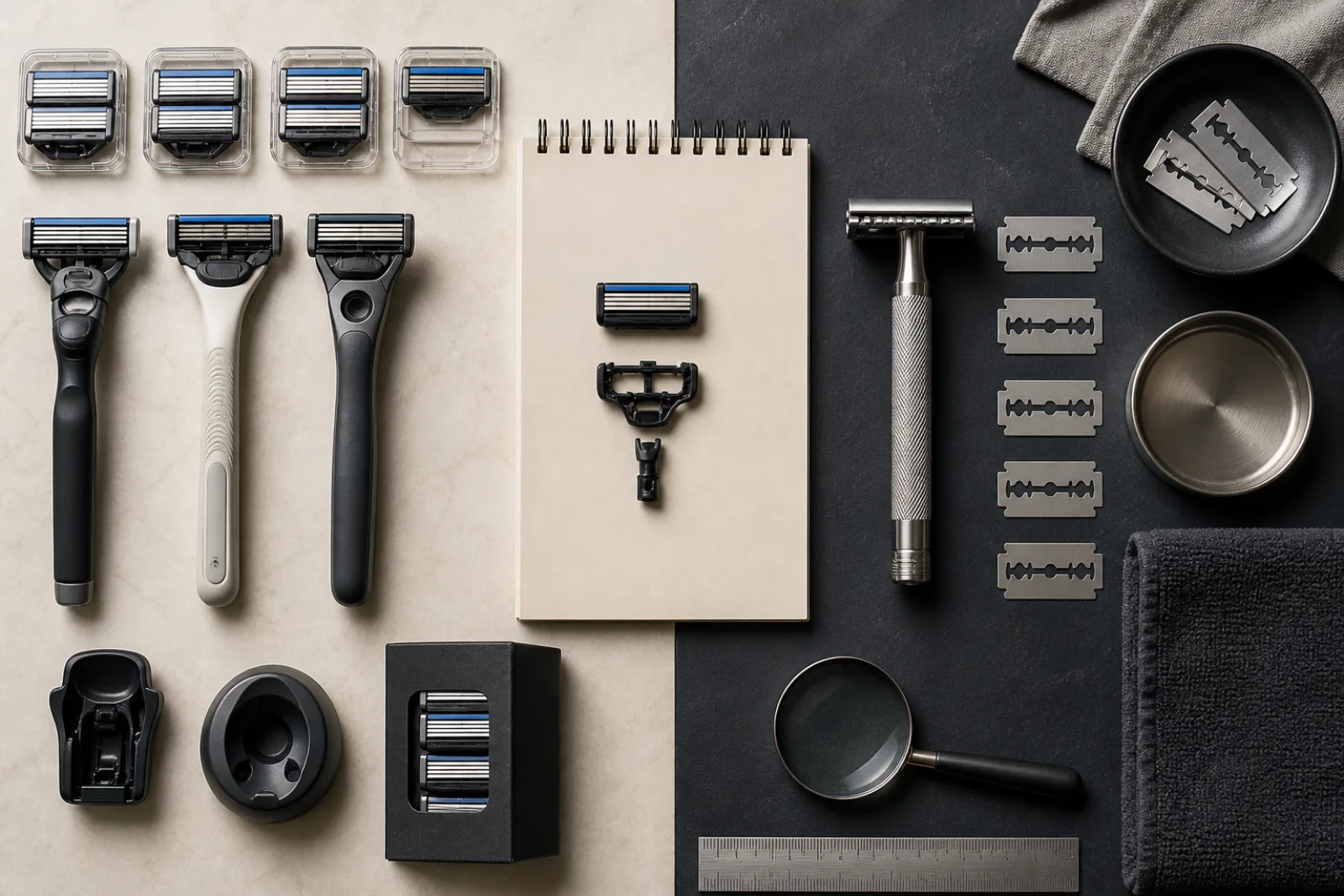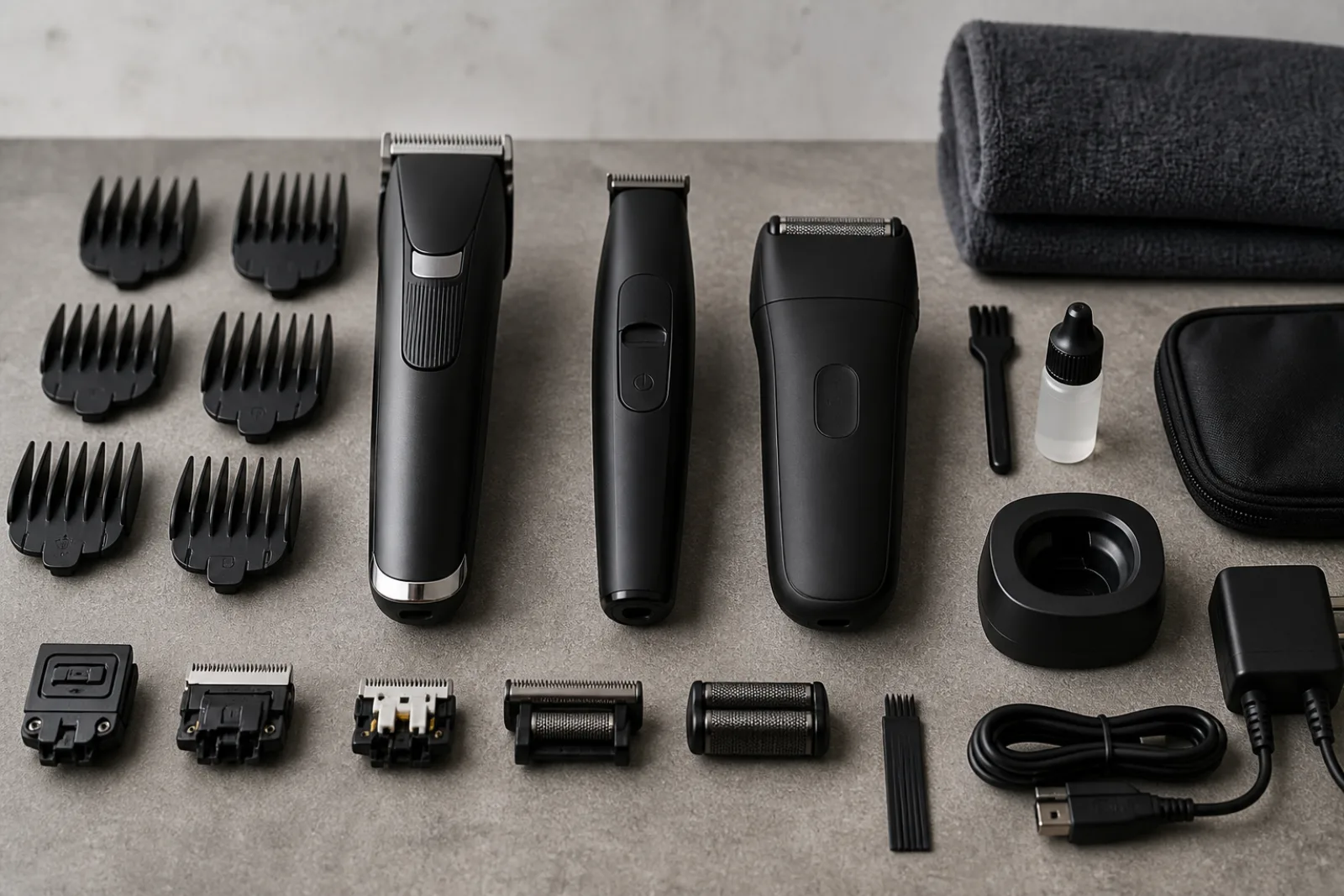
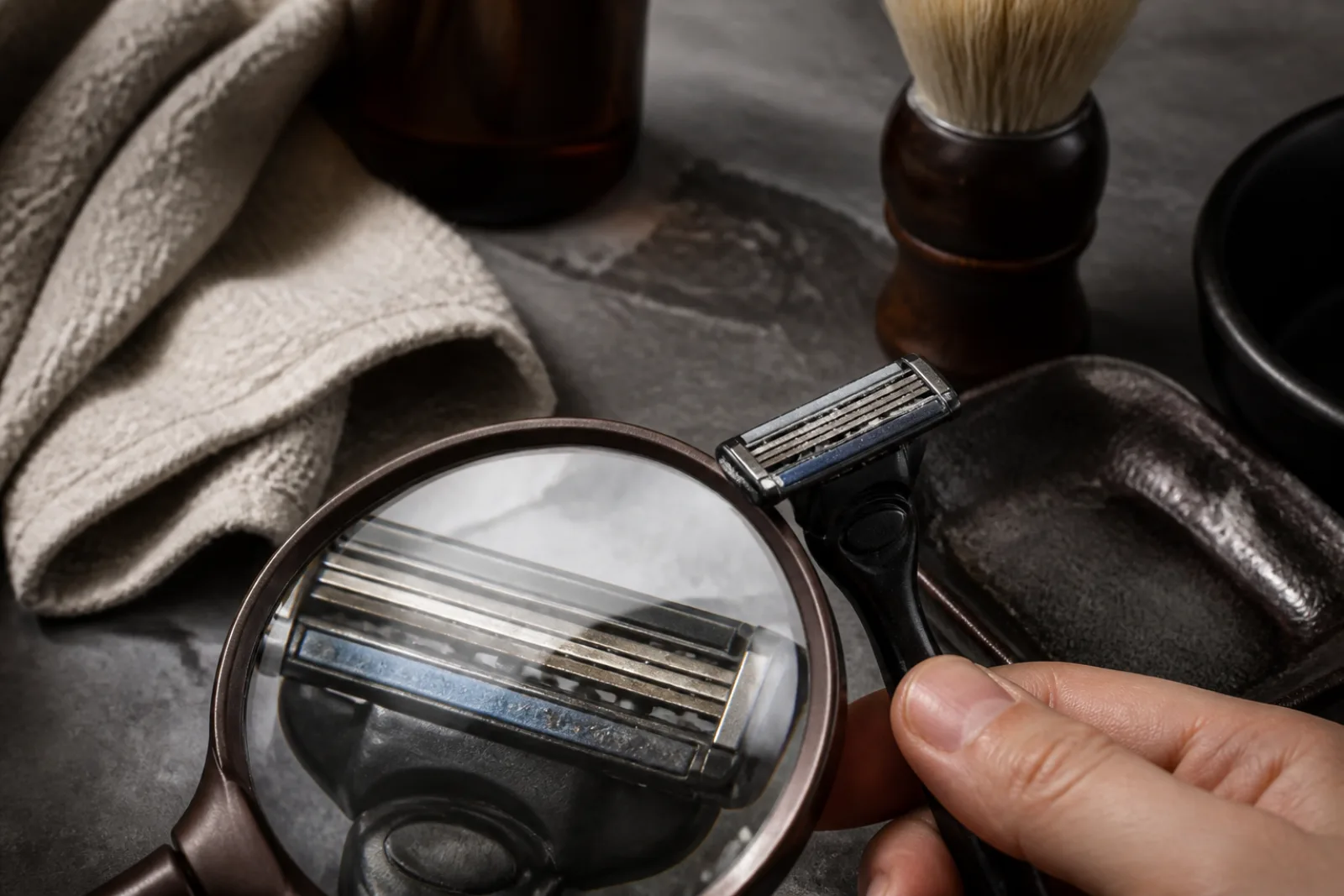
Razor marketing loves a number because a number fits on a box. 'Up to twelve shaves' is not a measurement of your beard. It is a suggestion that assumes a frequency, a coarseness, a lather, and a rinsing habit the manufacturer has never seen. The blade does not know what day it is. It knows whether the edge is still cutting hair or plowing it.
You find that out on the first pass, in good light, with the same soap you always use. If that pass tugs, skip the rest of the cartridge's advertised life.
Replace it, or shave?
Before you lather, and again after the first pass.
- 01Does the cartridge look wrong?
Bent blade corners, rust, a gap where a blade should be, dried paste you cannot rinse out.
- YesReplace it. Do not shave with a damaged edge. Irritation and nicks are the likely result, not a closer shave.
- No, it looks intactShave the first pass with your usual pressure, which should be almost none. Then judge tug.
- 02Does the first pass tug, skip, or sound scratchy?
Compare to how this same spot felt last week, not to a memory of a brand-new blade's first day.
- Yes, it dragsReplace it. More pressure will not restore the edge. It will raise the chance of a nick.
- No, it still glidesKeep it. Rinse well, tap water out, and stand it to dry. Recheck next shave.
- 03Did irritation show up after a shave that used to be fine?
Same soap, same area, more redness or bumpiness.
- Yes, and the blade is not newTreat the blade as a suspect. Replace it for the next shave before you overhaul the whole routine.
- The blade is new and it still burnsThe blade is probably not the variable. Technique, soap, grain, or skin is. Do not keep swapping cartridges to solve that.
What shortens a blade, in practice: coarse or curly hair, shaving two or three days of growth instead of one, going over the same area dry, and leaving the cartridge in a puddle. What lengthens it: a real lather or a slick soap, shaving with the grain first, rinsing the head under a strong stream so hairs do not dry in the gaps, and storing it dry. Knocking the cartridge on the sink to clear it is a good way to misalign a thin edge. Rinse, shake once, leave it in the air.
Cartridge count (three blades, five blades) is a geometry choice, not a durability score. More blades can feel smoother on a fresh head and clog faster if you do not rinse. A single double-edge blade in a safety razor is cheaper per edge and asks you to learn an angle. Neither system has a universal shave number. People who shave daily with fine hair will laugh at your five-shave cartridges, and they are not wrong about their face.
Between shaves
- 01Rinse until the head is clear
Hold it under the tap, not in standing sink water. Hairs trapped between blades dry into a felt that makes the next shave scrape.
- 02Shake, do not bang
One downward shake. Hitting porcelain chips edges.
- 03Dry storage
Stand the handle so the cartridge is in air, not in a closed wet travel cap. A travel cap is for the bag, not for overnight in a steamy bathroom if you can avoid it.
- 04Cap only when traveling
If you must cap it, dry it first. A wet cap is a rust chamber.
| Signal | Use it? | Why |
|---|---|---|
| Tug on the first pass | Yes | The edge is no longer cutting cleanly |
| Visible rust or a bent corner | Yes, immediately | The edge is compromised |
| The box said 12 and you are on 8 | No | The box does not know your beard |
| A subscription reminder email | No | That is inventory for the brand, not wear on your face |
| You pressed harder to finish | Yes, as a warning | Pressure is how people finish a dead blade and then blame the soap |
The face is the instrument
- 01
Replace on tug, damage, or new irritation, not on a printed shave count.
- 02
Rinse and dry. A wet cup is corrosion.
- 03
Your hair and your skip days set the life of the blade. A neighbor's number does not.
Questions
- 01Do blade-sharpener gadgets work?
They can knock debris off and sometimes make a tired cartridge feel briefly better. They do not restore a honed edge the way a barber hone restores a straight razor. If you need a gadget to finish the box count, the cartridge is already past the comfortable point. Spend the money on the next head.
- 02Should I change blades on a schedule anyway, for hygiene?
Rinse and dry are the hygiene. A blade that still glides and looks clean does not become unsafe on day ten because a blog said seven. A blade that sat in a gym bag wet should be replaced because of rust, not because of a number.
- 03What about electric shavers?
Foil and rotary heads also dull and also have a maker's month-count. Use the same logic: more pull, worse closeness, replace the foil or cutter. Clean the hair out. The electric article in Reviews covers choosing a trimmer; this page is the disposable or DE edge.