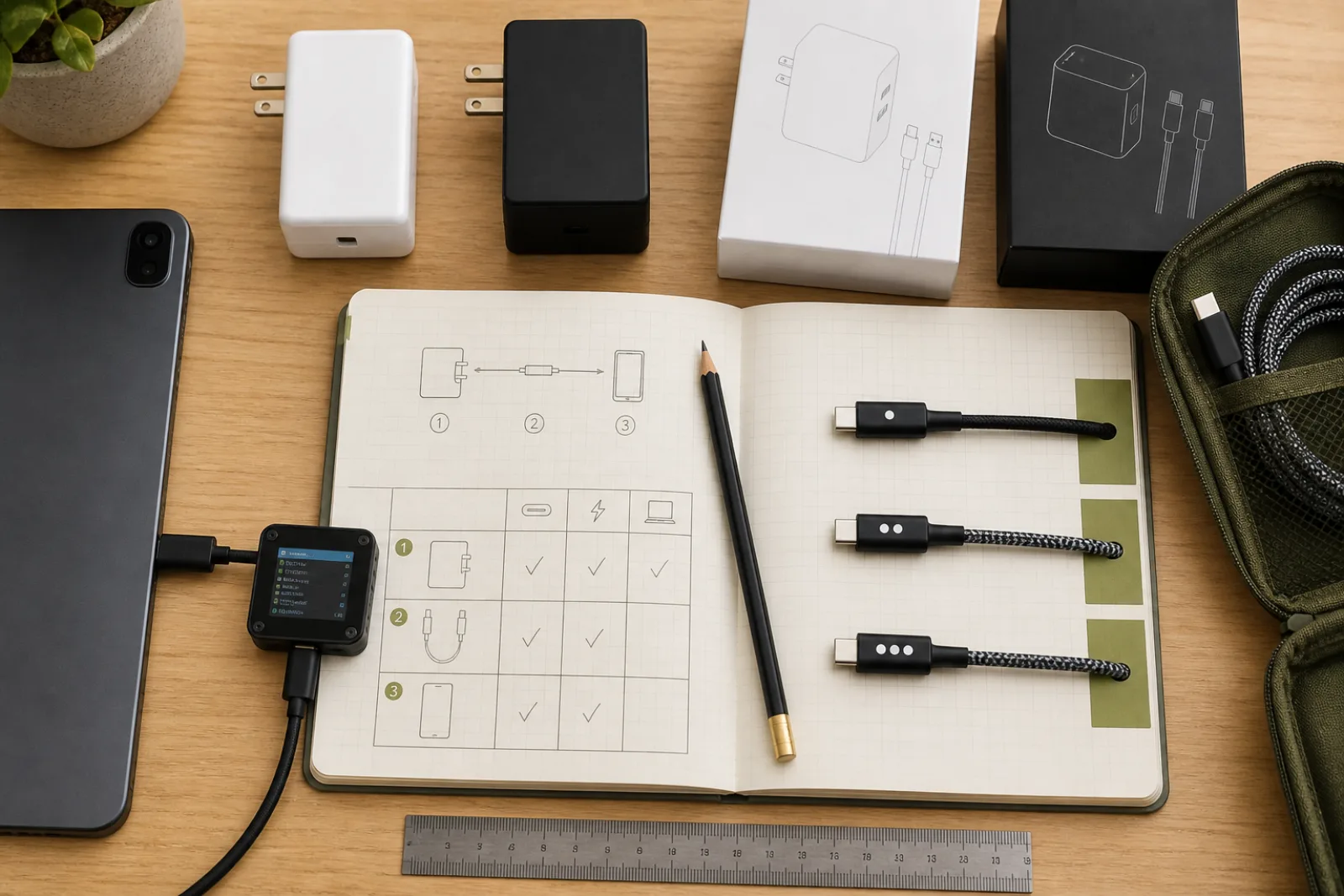
USB-C is a shape. USB Power Delivery is a language spoken on that shape. A charger that implements PD tells the device, over a configuration channel in the cable, which voltages and currents it can offer. The device answers with a request. If both sides agree, they have an explicit power contract. If they do not, you get a slow charge, a warning, or nothing. The wattage printed on the plastic is the manufacturer's hope about the best contract, not a law of physics that applies to every port at once.
USB-IF announced PD Revision 3.1 in 2021 specifically to push that best contract from 100 watts to 240 watts. That jump is not 'more of the same 20 volts.' It is a new voltage neighborhood called Extended Power Range. If you only remember one line from this page, remember the 100 watt border.
- Standard Power Range (SPR)
- Fixed rails commonly 5 V, 9 V, 15 V, 20 V. Ceiling 100 W (20 V at 5 A). This is what almost every phone and many thin laptops actually use.
- Extended Power Range (EPR)
- Adds 28 V (up to 140 W), 36 V (up to 180 W), and 48 V (up to 240 W), all at up to 5 A. USB-IF: PD 3.1 plus USB Type-C Release 2.1 cable rules.
- Adjustable voltage (AVS)
- USB-IF: the device can request intermediate voltages between 15 V and the charger's maximum available fixed voltage. TI's EPR notes: 100 mV steps from 15 V to 48 V once in EPR mode.
- Programmable Power Supply (PPS)
- A finer, typically 20 mV, adjustment used in SPR for efficient battery charging. Different mode from EPR's AVS. A phone that wants PPS will not treat a fixed-only 20 V brick as equivalent.
- Who is in charge
- USB-IF: power direction is no longer fixed. A monitor can power a laptop. A laptop can pass charger power through to a phone. The sink still has to request what it needs.
USB-IF USB Charger (USB Power Delivery) page; Texas Instruments SPR/EPR design note.
Three parties to every 'fast charge'
- 01Source (the charger)
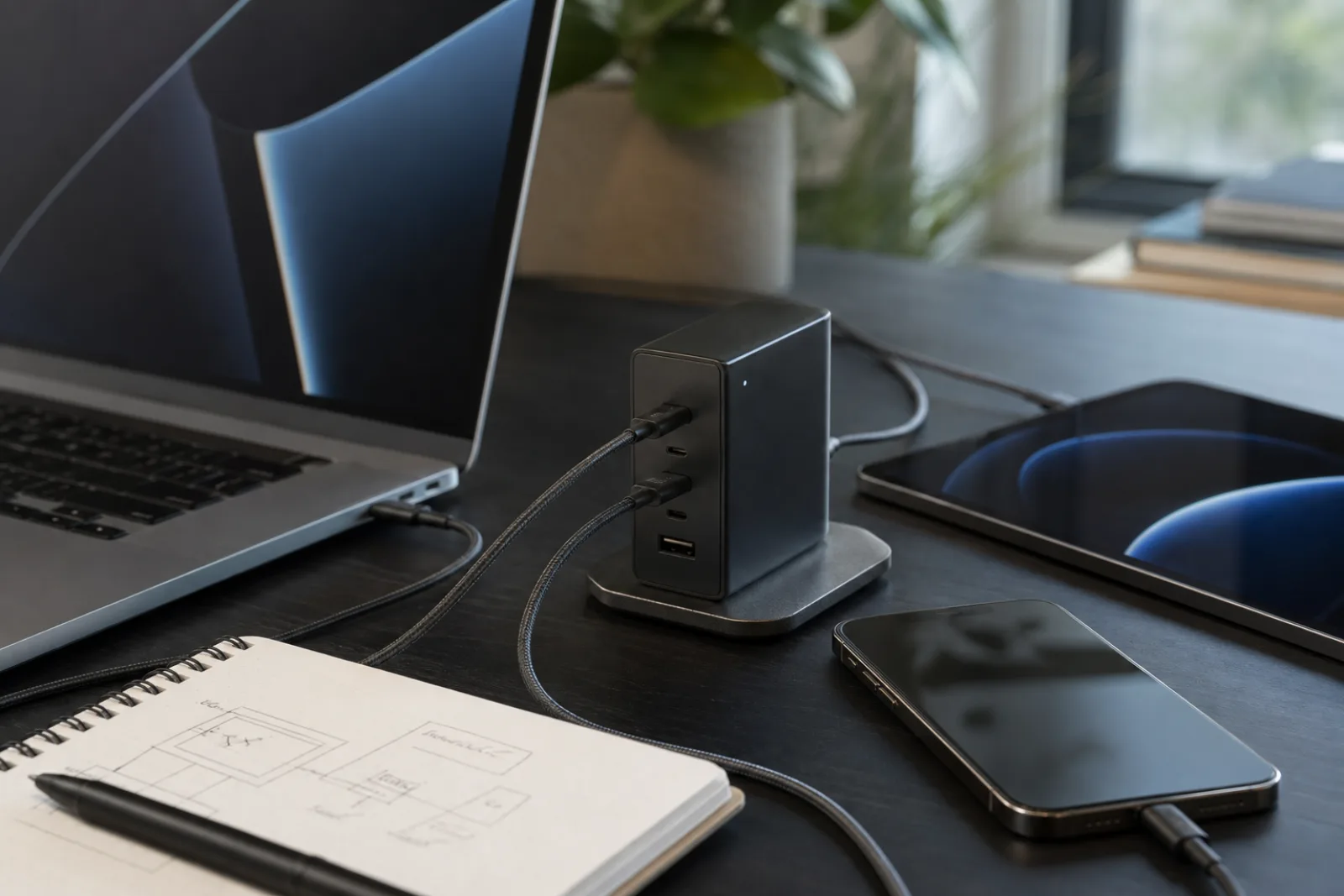
Advertises power data objects: which voltages, how many amps, whether EPR or PPS is available. A dual-port brick may advertise less on port 1 the moment port 2 is occupied.
- 02Cable
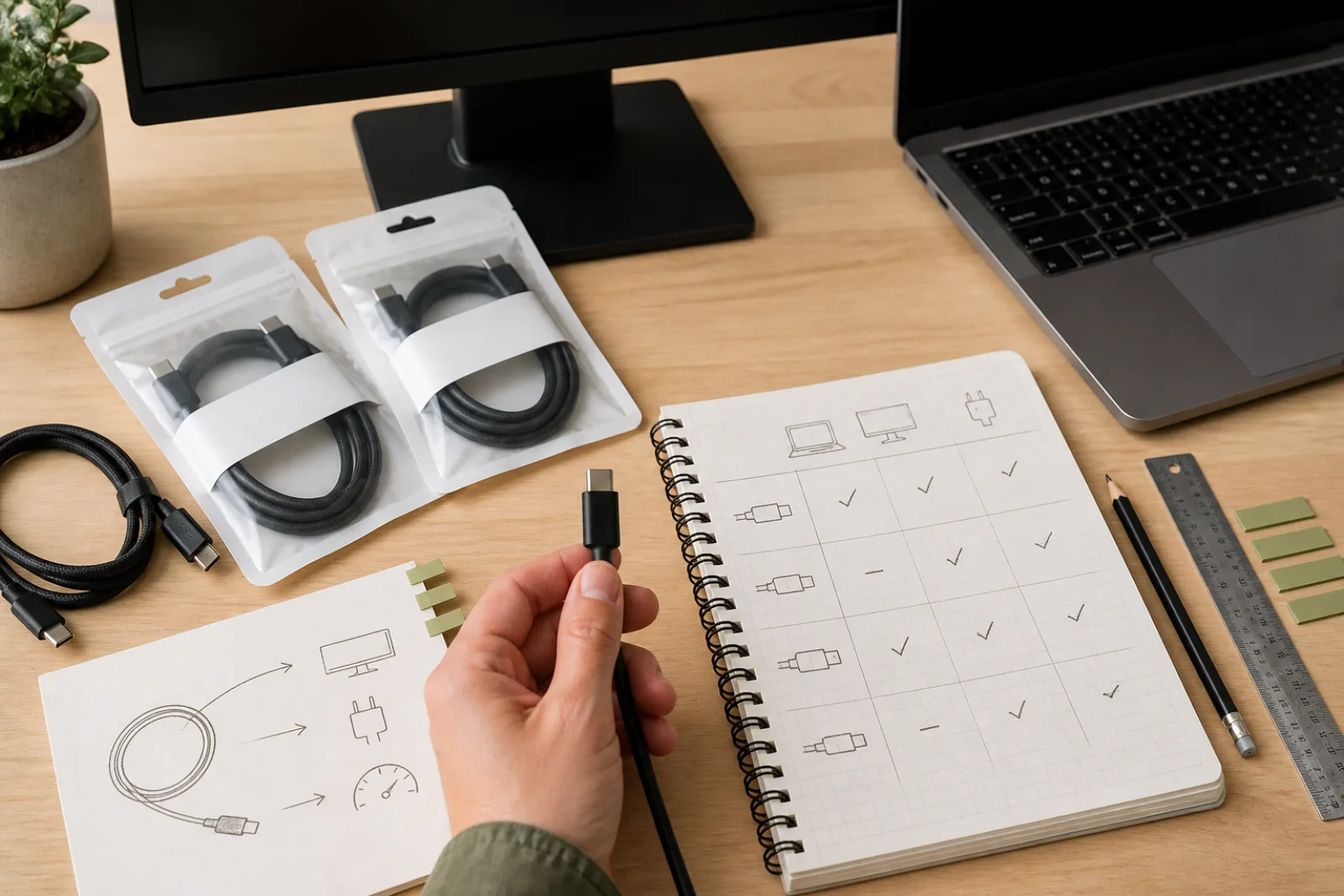
Electronically marked cables tell both ends their current and voltage limits. A 3 A unmarked cable will not become a 5 A cable because you bought a 100 W charger. EPR above 100 W needs an EPR cable, not a leftover 60 W cord.
- 03Sink (the device)
Requests a contract it is designed to accept. A phone that maxes out at 9 V will not draw 140 W from a 240 W charger. The unused headroom is not a defect.
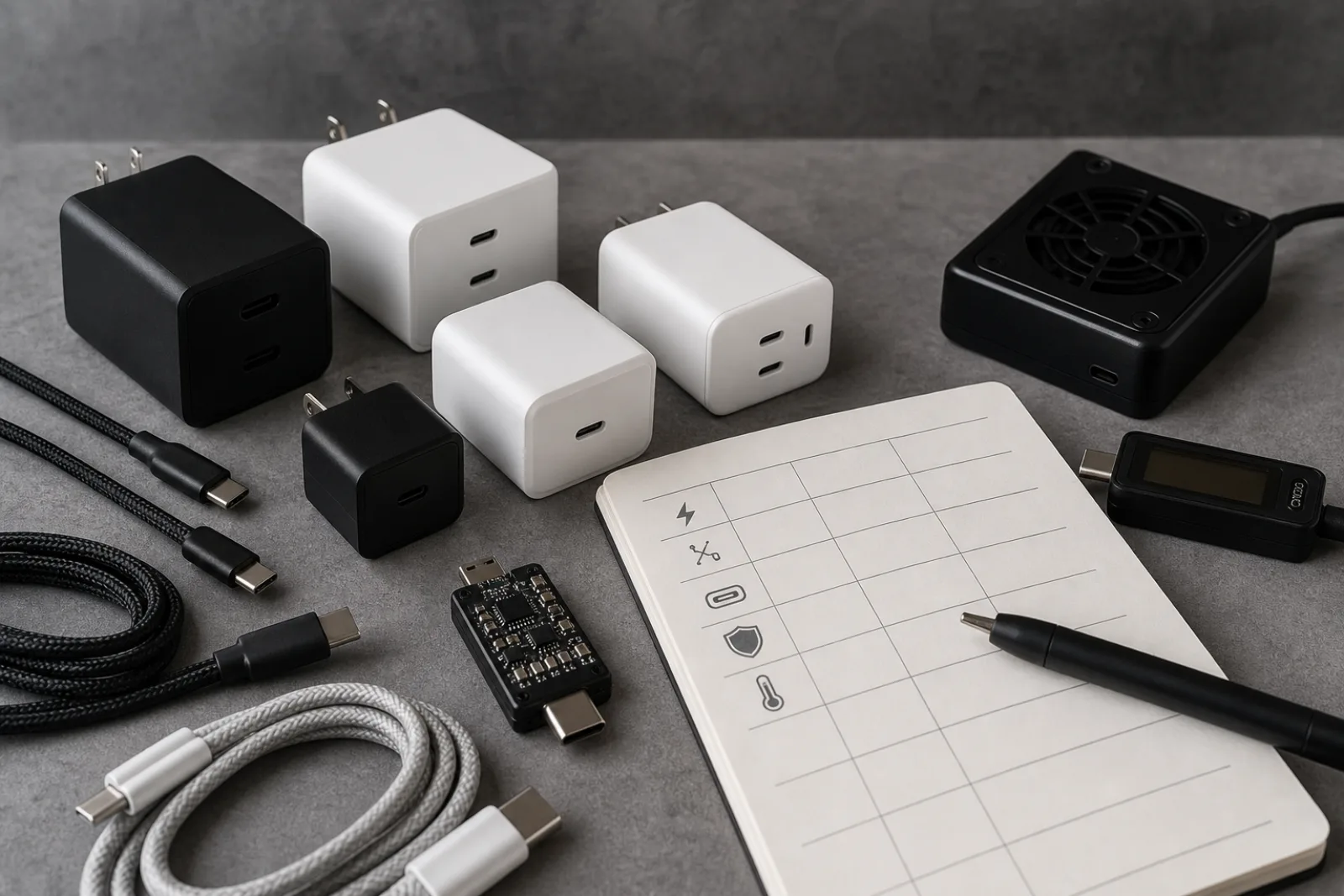
This is why two USB-C chargers with the same printed wattage behave differently. One might offer only fixed 5/9/15/20 volt steps. Another might add PPS, which some phones use to run cooler, faster charge curves. A third might be EPR-capable for a 16-inch workstation and still charge a phone on a 5 volt fallback. PD's job is that negotiation. It is not a promise that every device gets the headline number.
USB-IF says companies that want the certified USB charger logos must pass compliance testing, land on the Integrators List, and hold a trademark license. That is the adult version of 'PD certified.' A lightning bolt icon from a phone maker's proprietary program can be faster on that maker's phones and irrelevant or slower on everything else. Those programs ride on top of, or beside, PD. They are not PD.
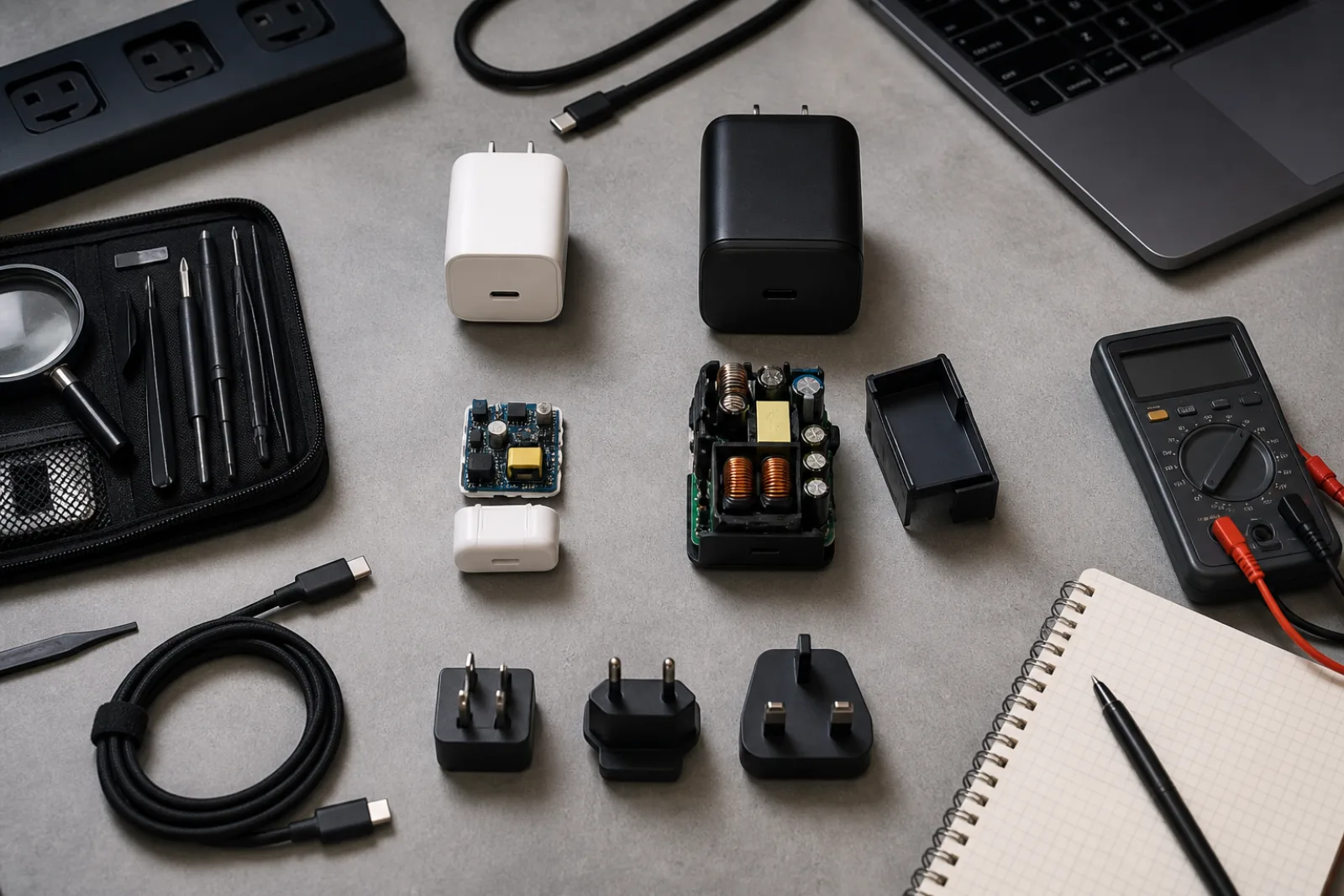
Safety is a separate stack. IEC 62368-1 and national listing marks (UL, ETL, and so on) are about fire and shock. PD compliance is about speaking the protocol. A beautiful GaN brick can do one and not the other. What GaN chargers actually improve is the semiconductor and the size of the magnetics, not the contract language on this page.
The contract is the feature
- 01
PD means source and sink agreed on a voltage and current. The printed wattage is the best case, often shared across ports.
- 02
100 W is the SPR ceiling. Above that you are in EPR, with new voltages and a pickier cable.
- 03
Look for USB-IF certification when you care about interoperability. Treat mystery bricks as mystery bricks.
Questions
- 01Does USB-C always mean PD?
No. A port can be USB-C and only offer 5 volts at a limited current, or an older charging spec. PD is extra silicon and firmware talking on the configuration channel.
- 02Will a 240 W charger charge my phone faster than a 30 W charger?
Only up to what the phone requests. A 240 W EPR charger should still offer the low-voltage rails a phone uses. The extra 210 watts are for a different class of machine.
- 03Why did my laptop slow down when I plugged in a phone?
Multi-port chargers have a total budget. PD lets each sink ask. The source is allowed to offer less than the single-port headline when two sinks are present. That is the protocol working, not a broken brick.