The holes in a spring sweater are not a mystery of storage folklore. They are feeding damage from larvae that can digest keratin, the protein in wool, cashmere, silk, fur, and feathers. Adult clothes moths do not eat your clothes. Their young do, in the dark, on the garment you did not wear all summer, especially if that garment still smells faintly like you. University of Kentucky entomology is blunt about the sequence that actually works: clean the knit, then pack it in something that closes.
Cedar, lavender, and a spritz of 'fresh linen' do not complete that sequence. Fragrance can make a closet smell attended while larvae work in a folded cuff. Mothballs are a different category entirely: they are pesticides, and using them in an open wardrobe is both a health mistake and, in the United States, an off-label use of a registered product.
Kentucky's fact sheet is the household version of the biology. Larvae prefer dark, undisturbed places: closets, chests, boxes. Clothing and blankets in regular use are seldom infested. Cotton and polyester are rarely attacked unless they are blended with wool or heavily soiled. That last clause matters. A 'washable wool blend' that went into the bin with last winter's restaurant stain is still a meal.
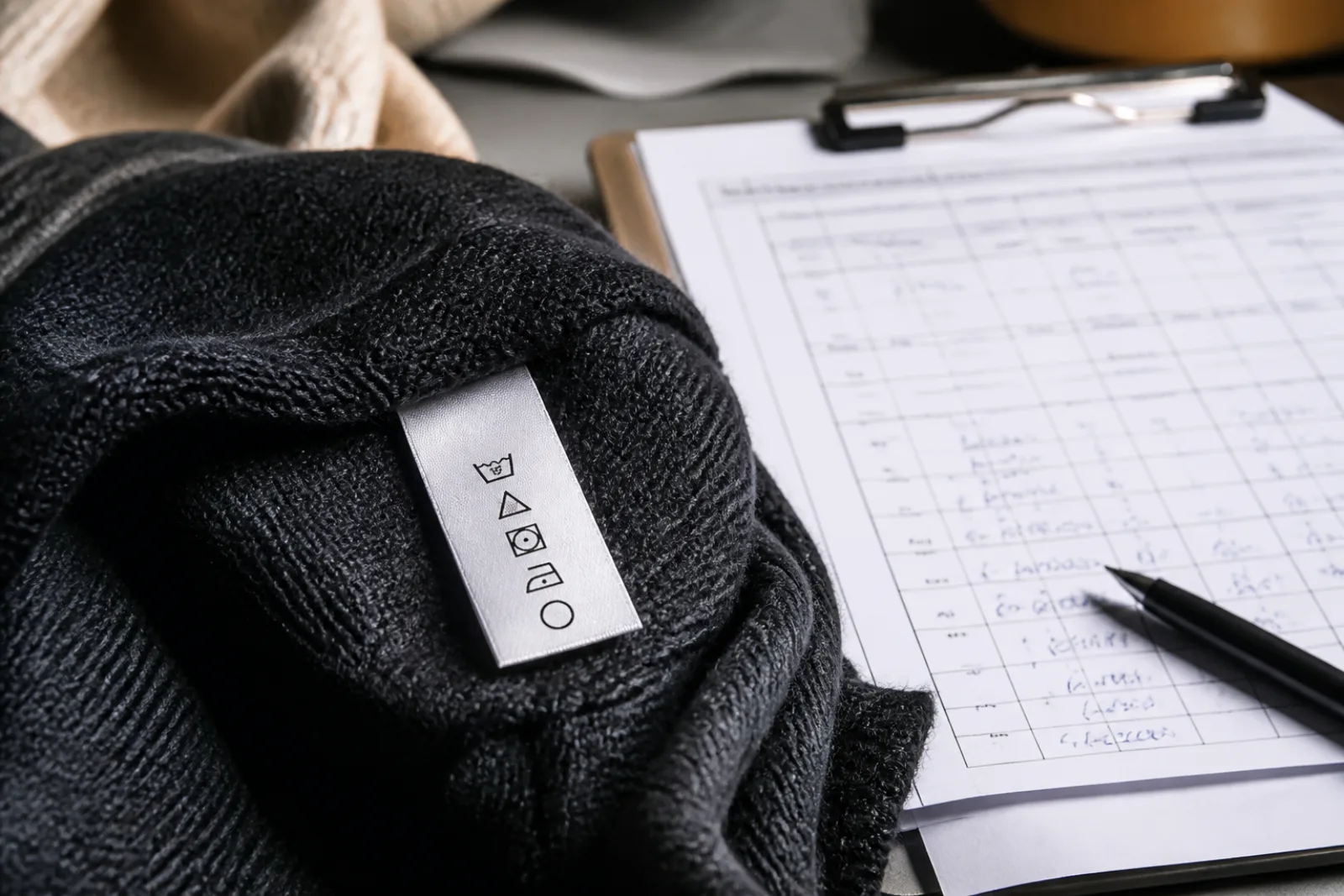
Cleaning before storage does two jobs. It kills eggs and larvae that are already on the garment, and it removes perspiration odors that attract pests. Follow the care label: many merino and cashmere pieces can be washed gently and dried flat; structured or 'dry clean only' knits should be cleaned, not just aired on a hanger for an afternoon. Airing is not cleaning. If you can still smell last season's wear, a moth can find it too.
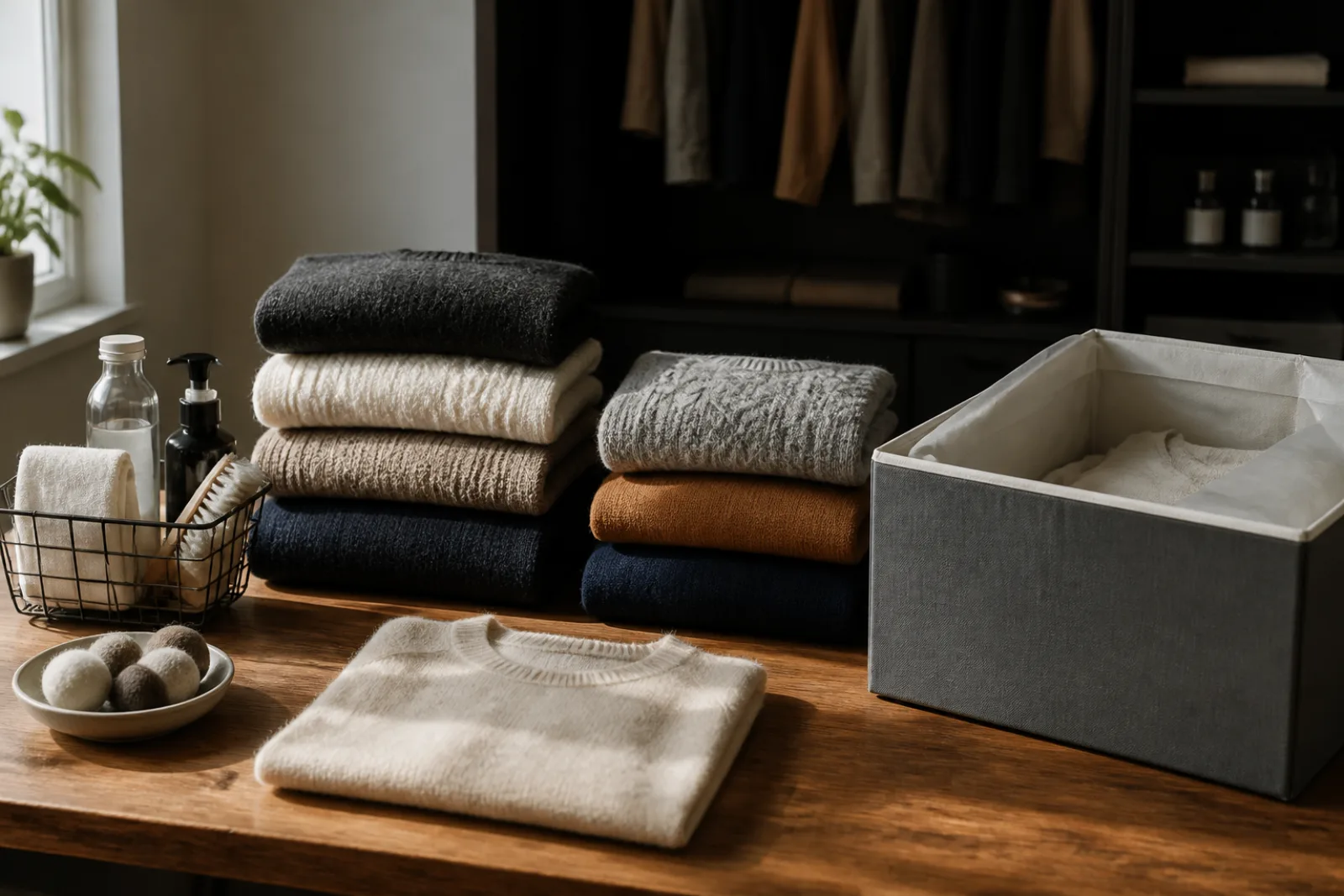
Shape is the other half of 'between seasons.' Knit fabric is a series of loops. Hang a heavy sweater by the shoulders for six months and the loops at the shoulder and upper chest elongate. Fold, or stack loosely on a shelf, with the heaviest pieces at the bottom. Tissue in the folds is optional; a hanger is not a storage system for a knit.
The storage sequence that matches the pest
- 01Inspect
Look at cuffs, under collars, and along folds for holes, webbing, or granules. If you find active larvae, isolate the piece. Cleaning still comes first; do not pack an infestation into a 'protective' bag.
- 02Clean
Launder or dry-clean per the label. This is the step Kentucky names for killing eggs and larvae and removing sweat. Let the knit dry fully. Damp wool in a bin is a mildew project.
- 03Fold
Flat, with the garment supported. No hanger. No stuffing a damp sweater into a vacuum bag 'to save space' before it is dry.
- 04Contain
Tight-fitting plastic bags or a rigid lidded bin. Kentucky's language is 'tight-fitting.' A cotton storage bag is breathable and is not a moth barrier.
- 05Place
A cool, dry, lived-in closet beats an attic. Check once mid-season if you can. Items in use are safer than items forgotten.
| Method | What it can do | What it cannot do |
|---|---|---|
| Wash or dry-clean, then a tight bin | Kill existing eggs/larvae (via cleaning) and block new adults from laying on the knit | Rescue a sweater that is already holed |
| Cedar chest, blocks, or hangers | Florida IFAS: oil may kill small larvae; a closed chest helps if the contents were clean | Stop large larvae; protect dirty knits; last forever as the oil fades |
| Lavender or 'fresh' sachets | Change how the closet smells | Kill eggs, larvae, or adults. Scent is not a pest treatment. |
| Mothballs in an open closet | Put pesticide vapor into the room you breathe | Legal or effective use. NPIC: labels require a tightly closed container. Open-closet use lets fumes escape. |
| Mothballs in a sealed chest, per label | Build up vapor that can kill moths in that sealed volume | A pleasant storage smell. Air the garments before wearing. Keep away from children and pets. |
Vacuum bags are a space tool, not a magic pest tool. If the knit is clean and dry, a bag that actually seals is a tight container in Kentucky's sense. If the bag's zip fails, or you vacuum a still-damp sweater, you have compression damage and a moisture problem. Do not treat 'vacuum sealed' as a substitute for the wash.
Carpet beetles eat the same keratin and are easy to blame on moths. Kentucky notes the mix-up. The storage advice is the same: clean, contain, do not leave animal-fiber goods undisturbed and dirty. Vacuum the closet floor and the edges of rugs. Larvae like lint.
A spring-to-summer knit pack-up
- 01Every animal-fiber knit is washed or dry-cleaned and fully dry.
If you skip one piece, that piece is the infestation starter.
- 02Nothing is on a hanger for the off season.
Fold. Support. Do not stretch the shoulder.
- 03The container closes. You checked the lid, not the cedar block.
Cedar is optional theater after the barrier exists.
- 04The bin is not in an attic or damp basement if you have a closet on a lived-in floor.
Heat and humidity help pests and help wool smell stale.
Clean, fold, close
- 01
Larvae want keratin plus soil. Cleaning is pest control, not optional freshness.
- 02
Fold knits. Hanging is how sweaters grow shoulders they did not have in April.
- 03
A tight container beats a scented closet. Mothballs are a pesticide with a legal use pattern, not a seasonal potpourri.
Questions
- 01Can I store a sweater I wore once 'because it isn't dirty'?
Worn once is soiled enough. Body oils are the attractant Kentucky names. Clean it, then store it.
- 02What about cotton and synthetic knits?
They are lower risk unless blended with wool or filthy. They still stretch on hangers. Fold the heavy ones. You do not need moth protocol for a clean cotton tee, and you do need it for the merino blend in the same stack.
- 03I already have holes. Now what?
Clean everything in that storage group, vacuum the space, and inspect other animal-fiber goods (rugs, felt, wool coats). Repair is a darning or reweaving question. Storage going forward still starts with clean and contained, or the next season repeats.