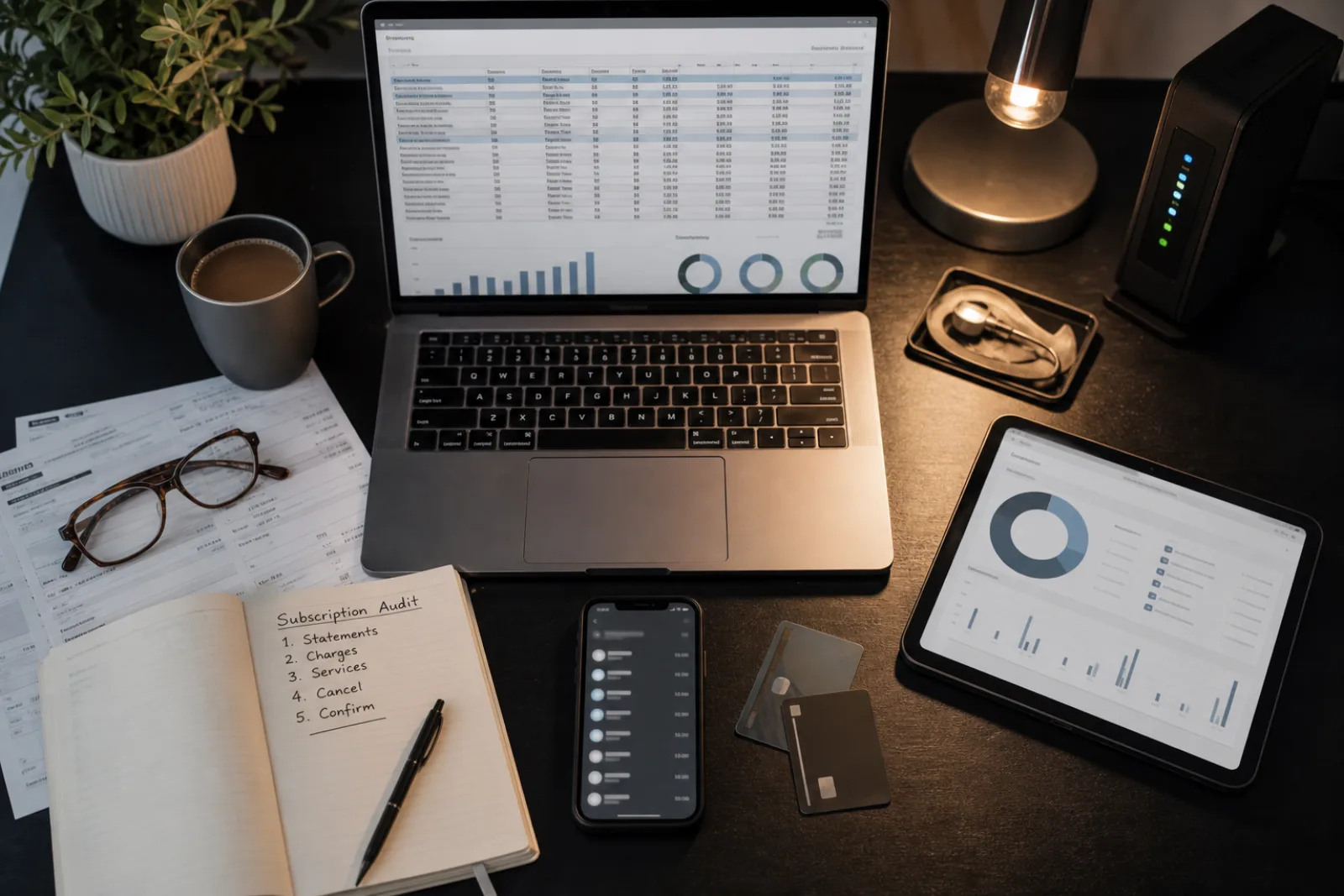

Feature tables are how two streaming apps look identical and one of them still has your card in three years. The comparison that matters is the money over a year, the rules at renewal, and whether leaving is a button or a quest. The federal Click-to-Cancel rule you may remember from 2024 is not in effect. A court vacated it in July 2025. Online, you still have ROSCA: material terms up front, consent, a simple way to stop the charge. That is a floor, not a promise the cancel link will be pretty.
If you already forgot what you pay, stop here and use the audit article. This page is for the moment before a new recurring charge starts.
Compare in this order
- 01Annualize
Monthly times 12, versus the prepaid year, versus 'first three months $1 then $15.' Write one number for each offer. Ignore per-day marketing.
- 02Read renewal and price-change
Does it auto-renew? How much notice? Can they raise the price mid-year? Annual prepaid is often a price lock; monthly is a permission slip to surprise you.
- 03Find cancel before you pay
Open the help page. If you cannot see an in-product cancel path, assume you will be on chat. ROSCA's 'simple mechanisms' is the legal idea. Your patience is the practical test.
- 04Treat the trial as day one of billing
Card on file plus a date. Put the date on a calendar. Deleting the app is not cancel. The audit article exists because people learn this late.
| Question | Why it changes the deal |
|---|---|
| Twelve-month cost | A $9.99 month is $119.88. A $99 year is cheaper if you will stay. It is more expensive if you will quit in month two and they do not prorate. |
| Proration and refunds | Some annual plans are all-or-nothing. That makes the 'savings' a bet you will not leave. |
| Cancellation path | Same medium as signup is the spirit of many state laws and of ROSCA's simple-mechanism idea. A phone number with a hold queue is a different product. |
| Who bills you | App Store, Google Play, or the company's site. Cancel in the same store you used. The other store cannot see the charge. |
| Data export | If your notes, photos, or workouts live only there, the switching cost is not the monthly fee. It is the hostage file. |
ROSCA applies to negative-option marketing on the internet: disclose material terms clearly before you take billing information, get express informed consent, and provide simple mechanisms to stop recurring charges. It does not apply to every gym clipboard. It does not define 'simple' as a one-click federal standard as strict as the vacated 2024 rule. The FTC started a new comment process in March 2026. Until a new rule exists, you compare offers with ROSCA, your state's automatic-renewal statute, and your willingness to walk away.
Family plans and student discounts change the annualized math. So does a second profile you will not use. Count seats you will actually log into. A 'free' bundled subscription inside a phone plan is still a subscription if leaving the phone plan is the only cancel path.
Do you need a subscription-tracking app is a Reviews question about software that watches charges. This page is the human comparison before the charge exists. Why subscriptions became the default is the culture piece.
Year, terms, exit
- 01
One annualized number per offer.
- 02
Renewal and cancel path are features. ROSCA is the online floor, not Click-to-Cancel.
- 03
A trial with a card is a start date. Calendar it.
Questions
- 01Is monthly always more flexible?
It is easier to stop at month-end if cancel works. It is more expensive if you stay a year, and easier for the company to raise the price. Flexibility is the cancel button, not the word monthly.
- 02The annual plan is non-refundable. Is it a trap?
It is a bet. Take it only if the twelve-month number is worth it even if you leave at month ten with no money back.
- 03Can I trust 'cancel anytime' on the homepage?
Trust the control you can find while logged in, in the same store you used to pay. Homepage copy is advertising.