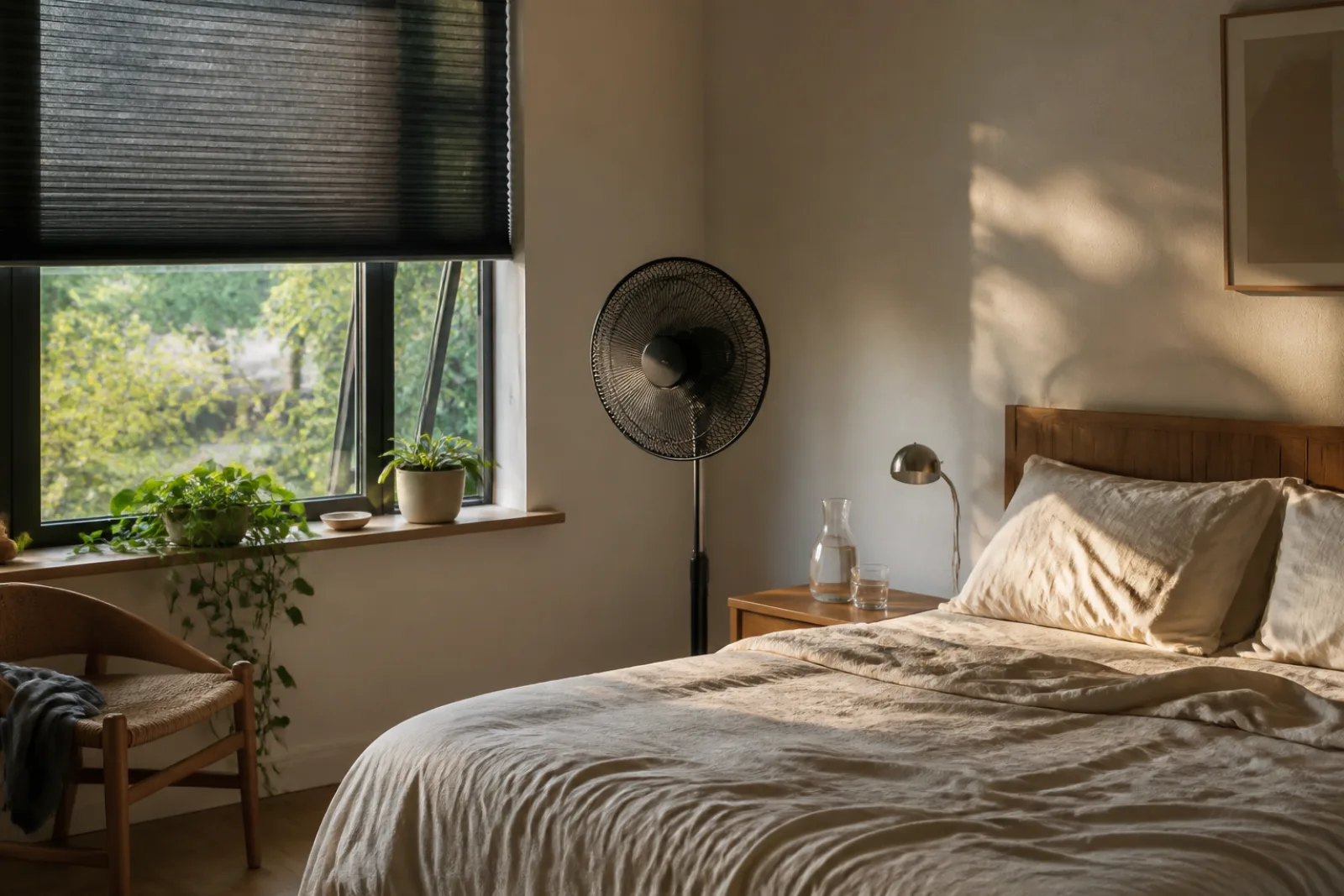
You cannot always lower the thermostat. You can stop the room from taking sun all day, move air across skin, and use bedding that does not trap the heat you are trying to dump. That is most of the non-HVAC toolkit.
A bedroom feels cooler at night when you reduce the heat the room stored during the day, move air across the skin, and stop trapping that heat in foam and synthetic bedding. NHLBI already names 'cool' as part of a sleep environment; the practical, no-new-HVAC version is shade, ventilation when the outdoor air cooperates, a fan aimed at people, and bedding that can dry. Gimmick surfaces help less than closing the solar gain path at 3 p.m.
Keep a stable sleep and wake time, make the room dark and quiet, and use the hour before bed without bright screens. If sleep stays difficult after that, talk to a clinician rather than buying another gadget.
7 MIN
The weekly letter
CULTURE COLUMN in your inbox.
One useful story, a short edit of objects and ideas, and no manufactured urgency.