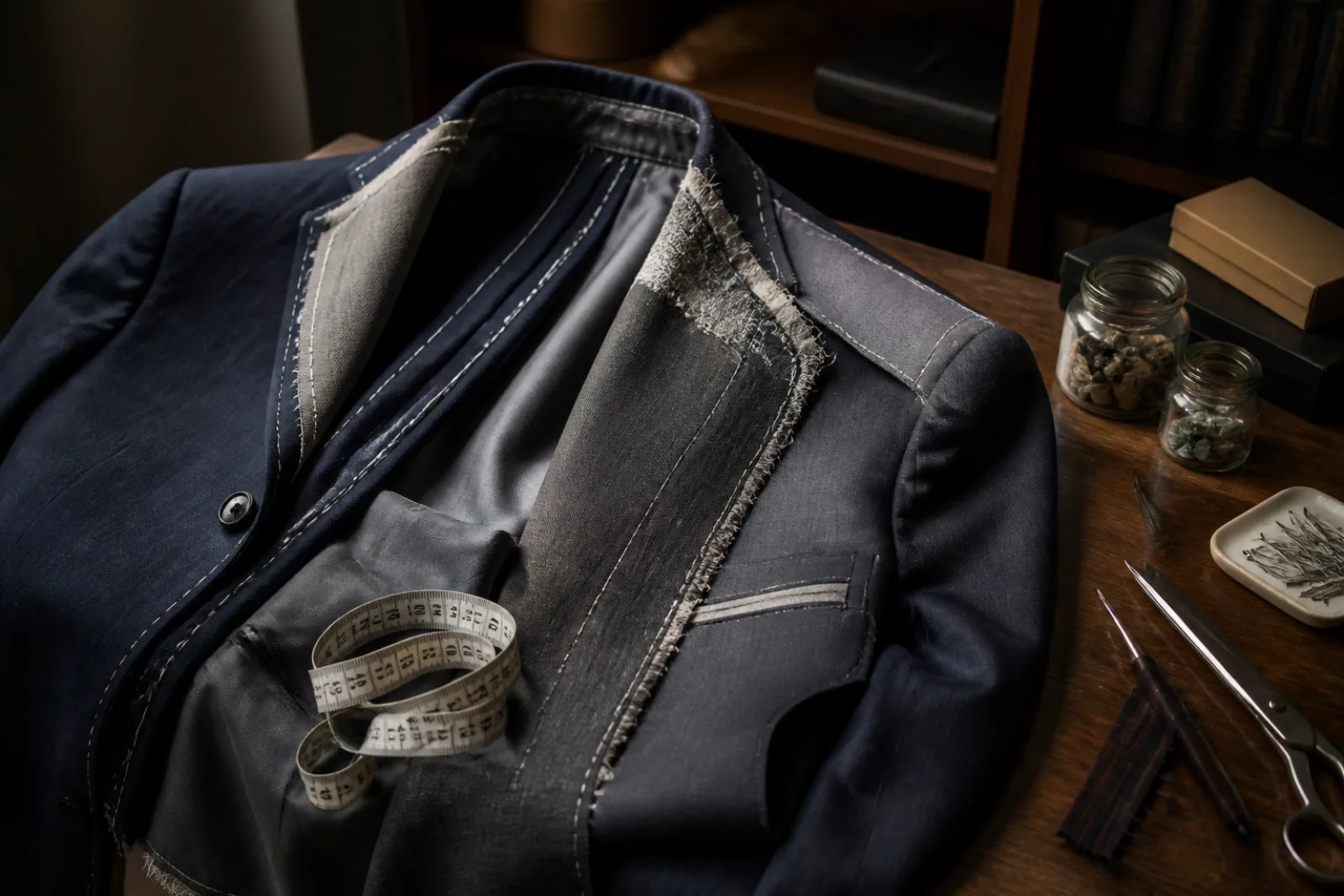
A tailor is not a 3D printer. Cloth is already cut. Seams have a limited amount of extra fabric folded inside. A dart can be moved a little. A pocket cannot jump two inches inward without looking like a pocket that jumped. The useful decision is whether the garment's skeleton matches your skeleton, and whether the change you want is one of the jobs alterations shops do all day.
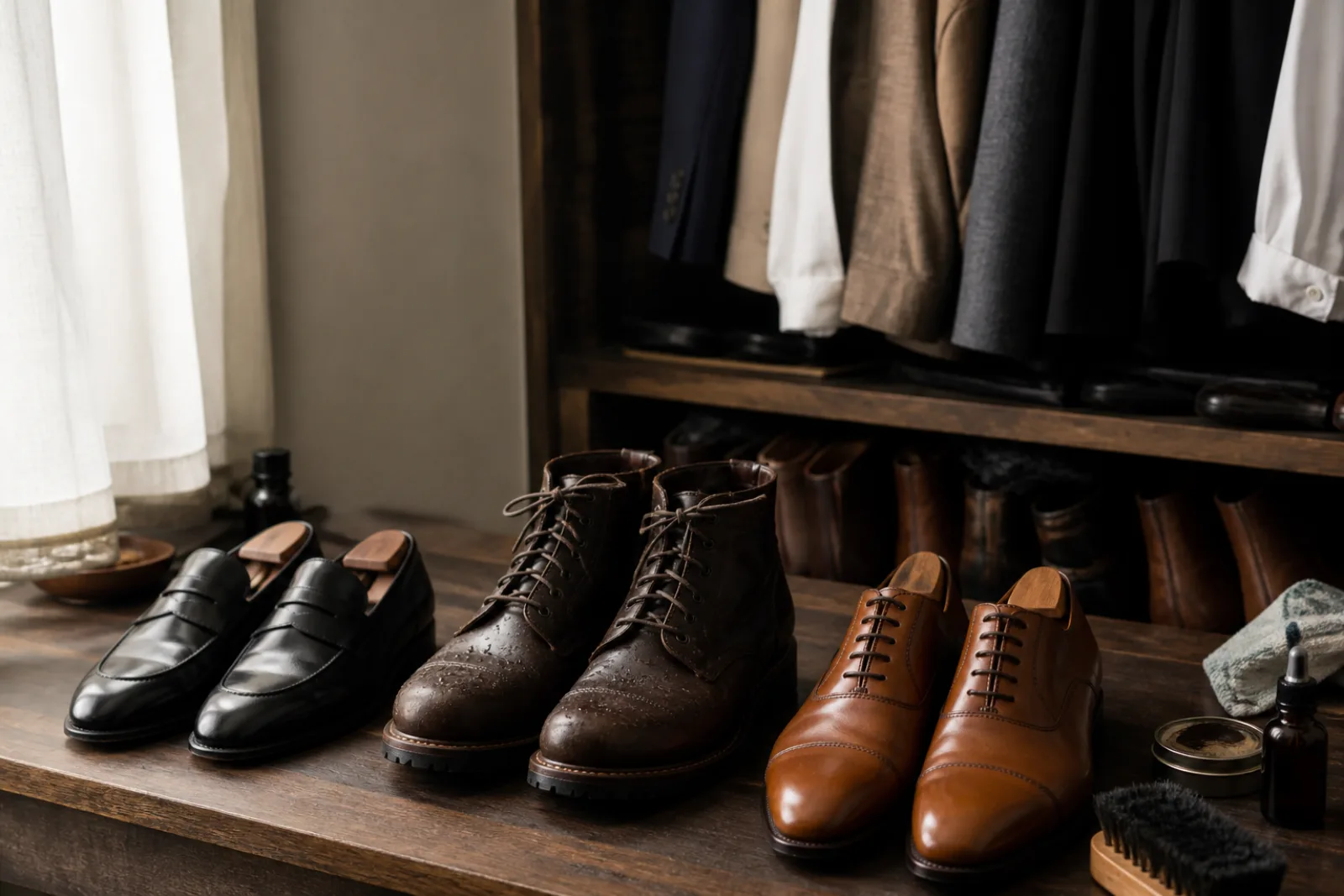
Bring the shoes you will wear with it. Bring the shirt you will wear under a jacket. 'Make it fit' without that context is how trousers come back the right length for a different life.
Start at the shoulders, not the hem
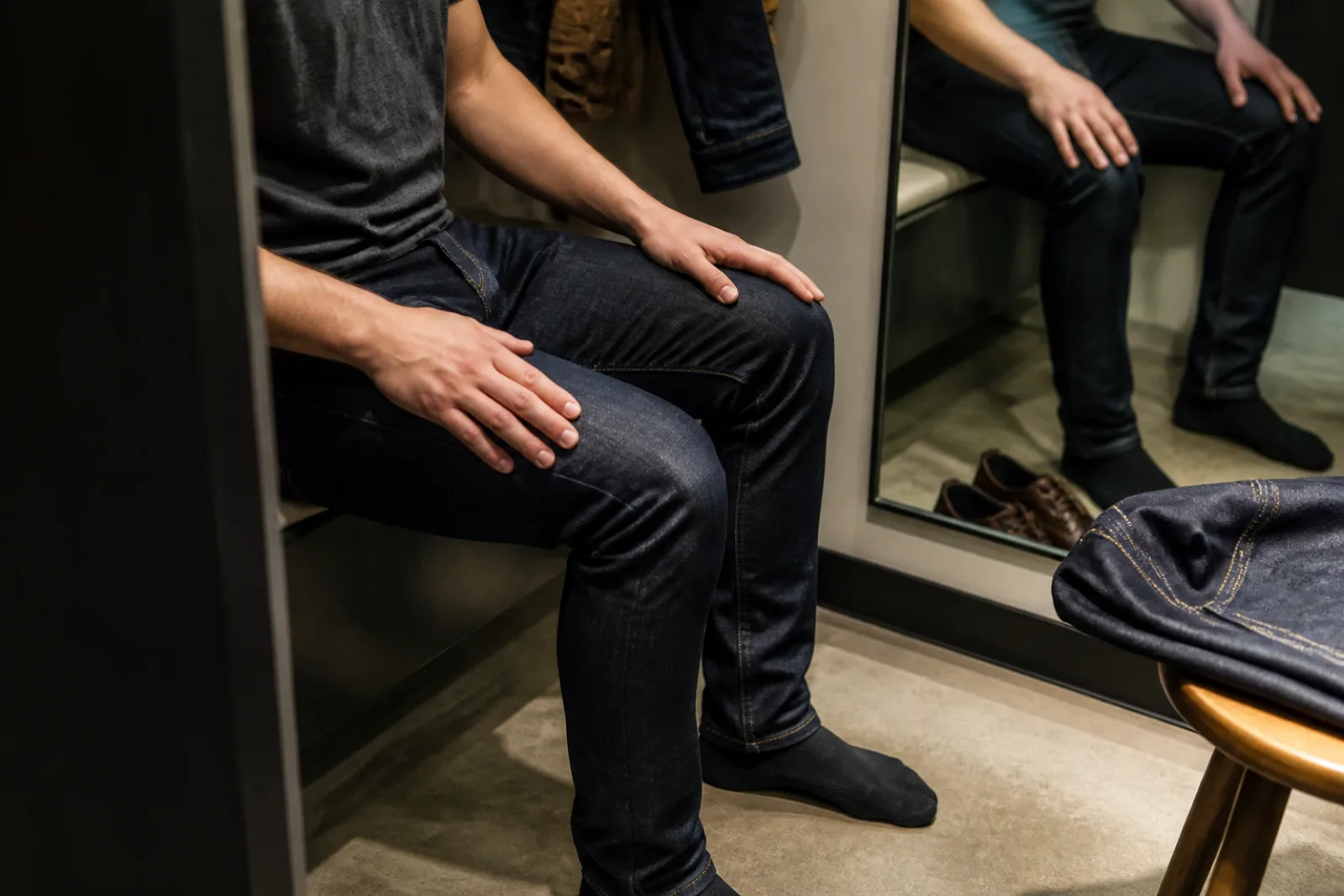
Put the garment on. Do not pinch the back in the mirror yet.
- 01Does the shoulder seam sit at the end of your shoulder, without collapsing or hanging off?
Jackets, coats, and set-in-sleeve shirts live or die here.
- No, it is clearly too wide or too tight through the shoulderDo not alter. Recutting a shoulder is specialist work and often costs more than a better-fitting garment. Try another size.
- Yes, or this is trousers / a skirt / a hem-only jobGo to the chest and waist.
- 02Does the chest or seat lie without pulling across buttons or wrinkling like a pulled sheet?
Horizontal pull lines mean there is not enough cloth. Clean vertical folds can mean there is extra.
- It pulls. Buttons strain. You cannot raise your arms.There is not enough fabric. Letting out only works if the seam allowance is there. Ask the tailor to look inside. If there is nothing to let out, this is the wrong size.
- It is a bit full, or the length is the only issueThis is ordinary alteration territory: take in, hem, sleeve length.
- 03Will the change disturb a pocket, a vent, a fly, or a pattern?
Show the tailor the pocket bag, the stripe, the kick pleat.
- Yes, and the change is largeGet a price before you commit. Relocating pockets and matching plaids is where bills jump and results look 'off.'
- No, or the tailor says it is a standard hem / waistPrice it against how often you will wear it. If that math is fine, proceed.
| Alteration | Usually reasonable | Usually a fight |
|---|---|---|
| Trouser or skirt hem | Yes, especially if the original hem has enough fabric to let down later | Original jeans hem with fading; a 'European' skinny taper that also needs the hem |
| Waist take-in on trousers or a skirt | An inch or two, if the seat still fits | Taking in so much that back pockets collide or the fly twists |
| Jacket sleeve length | Yes, if working buttons can be moved or you accept dummy buttons | Sleeves that also need to be narrowed through a working cuff |
| Jacket waist suppression | A moderate take-in at the side or back seams | A full size down through the chest, which the shoulder will then betray |
| Replacing a zipper, buttons, lining repair | Yes, if the rest of the garment is sound | A $15 fast-fashion piece whose fabric will not survive the restitch |
| Shortening a knit sweater | Sometimes, by a specialist | Most neighborhood dry cleaners; knits unravel and the rib hem is the hard part |
Seam allowance is the hidden inventory. A tailor should turn the garment inside out with you and show whether there is cloth to let out. 'Make it bigger' is not a personality request. It is a materials question. Fusing, cheap lining, and glued hems on fast garments also limit what can be done. If the cloth is already a paper-thin synthetic that shines when pressed, a beautiful alteration will still look like a beautiful alteration on poor cloth.
Cost relative to future wears is the adult part. A hem on the only trousers that fit your actual job is maintenance. A complex rebuild on a piece you bought because it was on sale is how sale items become more expensive than the thing that fit. Ask for the price first. A good shop would rather decline a bad job than take your money and return a distorted jacket.
What to bring to the appointment
- 01The shoes and the layer you will wear with the garment.
Hem length is a shoe problem.
- 02A clear list: hem, waist, sleeve. Not 'make it look expensive.'
Vague briefs produce vague clothes.
- 03A willingness to hear no on the shoulder.
That no is the value of the visit.
Alter the easy things on a garment that is already almost right
- 01
Shoulders and chest decide whether to proceed. Length and waist are the usual yes.
- 02
Pockets, patterns, and working cuffs are where prices and risks jump.
- 03
Pay for wears you will actually get, not for the fantasy of a perfect sale rack.
Questions
- 01Can jeans be taken in?
Waist and hem, often. A full taper that also preserves the original hem fade is a specific, sometimes pricey job. The seat and the thigh still have to fit before you talk about the ankle.
- 02Should I wash the garment first?
Yes, if it is something you will wash. Cotton and denim shrink. Hemming raw denim or unwashed cotton is how trousers become too short after laundry. Jackets you will only ever press can be fitted as they are.
- 03Is it worth altering thrifted clothes?
If the cloth and the shoulders are good, yes. If the piece is already worn through at the cuff, you are paying to tailor a leftover. Inspect the fabric as closely as the fit.